
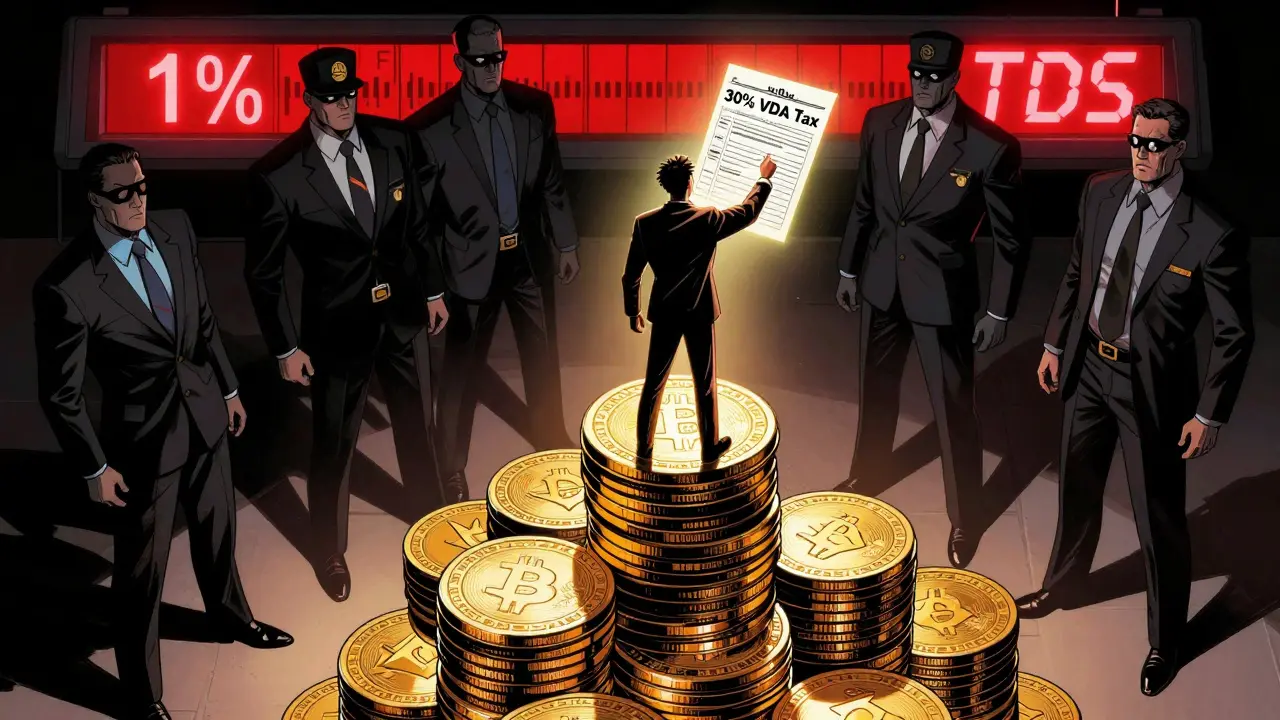
Is crypto regulated in India? The answer isn’t yes or no-it’s taxed, tracked, and monitored. You can buy Bitcoin, sell Ethereum, or hold NFTs without breaking any law. But if you make money from it, the government wants its cut-and they’re watching every transaction.
What’s Legal and What’s Not
Cryptocurrencies aren’t banned in India. You can still trade them on platforms like WazirX, CoinDCX, or ZebPay. You can hold them in your wallet. You can even send them to someone overseas. But here’s the catch: they’re not legal tender. That means no store, bank, or government office has to accept Bitcoin as payment. You can’t use it to pay your electricity bill or buy groceries at a supermarket.
The government made this clear with the Virtual Digital Assets (VDAs) are any digital tokens, codes, or assets created using cryptography, including Bitcoin, Ethereum, and NFTs, but excluding Indian rupees and other fiat currencies framework introduced in 2025. This definition covers nearly every crypto asset you can think of. But it doesn’t give them the same status as money. They’re treated like property-something you own, not something you spend.
The 30% Tax That Changes Everything
If you make money from crypto, the Indian government takes 30% of your profit. No deductions. No loss offsets. Not even a small break for long-term holdings. Whether you held Bitcoin for a week or five years, if you sold it for more than you paid, 30% of that gain goes to the taxman.
This is one of the highest crypto tax rates in the world. Compare it to the U.S., where long-term capital gains can be taxed as low as 0%, or the UK, where rates cap at 20%. In India, it’s flat. 30%. Always.
And it gets worse. There’s no way to reduce your tax bill by claiming losses. If you lost ₹50,000 on Solana but made ₹80,000 on Cardano, you still pay tax on the full ₹80,000. The losses don’t cancel out. They just disappear.
1% TDS on Every Trade
On top of the 30% tax, there’s a 1% Tax Deducted at Source (TDS) on every crypto transaction. That means if you sell ₹100,000 worth of Ethereum, ₹1,000 gets pulled out before you even see the money. This isn’t a final tax-it’s a prepayment. You’ll get it back if you end up owing less than ₹1,000 in total tax for the year. But if you made a big profit, you’ll likely owe more.
This rule applies to every trade, even peer-to-peer sales. If you sell Bitcoin to a friend for cash, and they use a crypto exchange to send you the money, the exchange still deducts 1%. The government is forcing platforms to act as tax collectors.
Who’s Watching Your Transactions?
It’s not just the Income Tax Department. Multiple agencies are involved:
- Income Tax Department Enforces the 30% tax on VDA gains and tracks unreported income through data matching
- Financial Intelligence Unit India (FIU-IND) Monitors crypto exchanges for money laundering and suspicious activity
- Reserve Bank of India (RBI) Still opposes crypto as a financial threat and is developing its own digital rupee
- Securities and Exchange Board of India (SEBI) Has suggested crypto trading should be regulated like stocks, with licensing and oversight
The RBI tried to ban crypto banking back in 2018. Banks couldn’t serve crypto firms. That killed many startups. But in 2020, the Supreme Court shut down that ban. Since then, crypto has grown-but under heavy surveillance.
Why No Clear Law? The Missing Bill
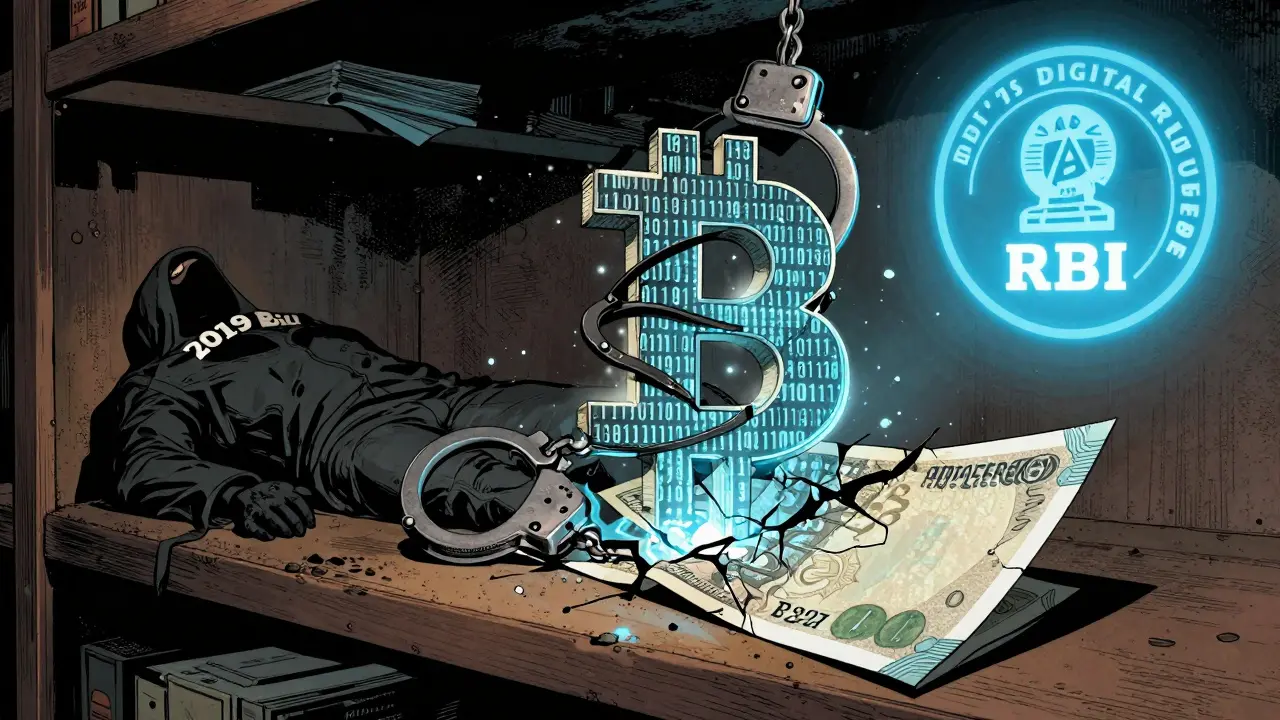
Despite all this, India still doesn’t have a proper crypto law. In 2019, the government drafted a bill called the Banning of Cryptocurrency & Regulation of Official Digital Currency Bill, 2019 A proposed law aimed at prohibiting private cryptocurrencies while creating a state-backed digital currency. It was supposed to ban Bitcoin and other private coins, and launch a government digital rupee.
But that bill never made it to Parliament. Five years later, it’s still sitting on a shelf. Meanwhile, the tax rules keep changing. The government is collecting money without giving clear rules. That’s why experts call it a legal grey area.
What Happens if You Don’t Report?
In 2019, the tax department started sending out notices to people who traded crypto but didn’t report it. These weren’t warnings-they were legal demands. People had to provide full transaction histories, wallet addresses, and proof of income. Many got hit with penalties, interest, and even raids.
Today, exchanges share data with the tax department. If you bought $10,000 worth of Bitcoin in 2024 and sold it for $18,000 in 2025, the exchange reported that. The tax department already knows. If you didn’t declare it, you’re on their radar.
Global Pressure and the G20 Effect
India didn’t make these rules alone. At the 2023 G20 summit, countries agreed to share crypto tax data automatically. That means if you traded on a foreign exchange like Binance or Coinbase, and you’re an Indian resident, the Indian tax department can now get your transaction history from abroad.
India pushed for this. They want to stop people from hiding crypto profits overseas. The Crypto-Asset Reporting Framework (CARF) and updated Common Reporting Standards (CRS) are now binding. If you think you can escape by using a foreign exchange, you’re wrong.
What About NFTs and Web3?
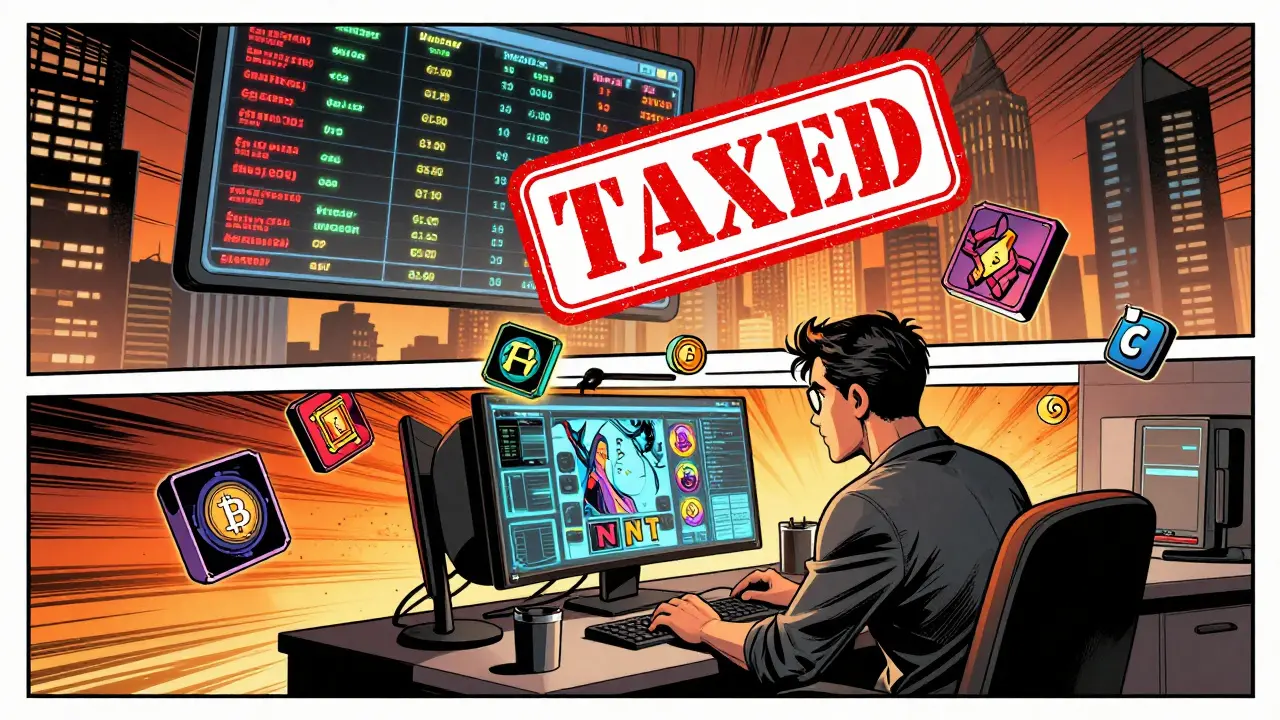
NFTs? Yes, they’re VDAs. So are tokenized real estate, gaming coins, and even digital art. If you sell an NFT for a profit, you pay 30% tax. If you buy one with crypto, that’s a taxable event too. The rules don’t care if it’s Bitcoin or a pixelated monkey. If it’s digital and crypto-based, it’s taxed.
Web3 startups are caught in the same net. If you earn tokens as a developer, or get paid in crypto, that’s income. You pay 30% on it. No exceptions.
What’s Next? The Road Ahead
Experts say India won’t ban crypto. Too many people own it. Too much money is involved. Instead, they’ll keep tightening the screws: more reporting, stricter compliance, and higher enforcement.
The RBI is working on its own digital rupee, which could replace some crypto use. SEBI might push for licensed crypto exchanges in the future. But don’t expect legalization like in the U.S. or EU. India’s goal isn’t innovation-it’s control.
For now, the message is clear: You can trade crypto. But you’re not an investor. You’re a taxpayer. And the government is watching.
Is it legal to buy Bitcoin in India in 2026?
Yes, it’s legal to buy, sell, and hold Bitcoin and other cryptocurrencies in India. The government does not ban ownership or trading. However, cryptocurrencies are not recognized as legal tender, meaning they cannot be used to pay for goods and services officially. All transactions are subject to tax reporting and 1% TDS.
Do I have to pay tax on crypto gains in India?
Yes. All profits from cryptocurrency trades are taxed at a flat rate of 30% under the Virtual Digital Assets (VDA) rules. There are no deductions for expenses or losses. Even if you lost money on other trades, you still pay 30% on every net gain. This applies regardless of how long you held the asset.
What is the 1% TDS on crypto transactions?
The 1% TDS (Tax Deducted at Source) is automatically taken out by crypto exchanges when you sell or transfer digital assets. For example, if you sell ₹50,000 worth of Ethereum, ₹500 is withheld immediately. This is not your final tax-it’s a prepayment. You’ll get it back if your total tax liability for the year is less than what was deducted.
Can I use crypto to pay for things in India?
No. Cryptocurrencies are not legal tender in India. No business, bank, or government agency is required to accept them as payment. Even if a store says they accept Bitcoin, they’re doing so at their own risk. The government has made it clear that crypto is not money-it’s a digital asset subject to tax.
Are NFTs taxed the same as Bitcoin in India?
Yes. NFTs are classified as Virtual Digital Assets (VDAs) under Indian tax law. Any profit from selling an NFT-whether it’s digital art, a collectible, or a game item-is taxed at 30%. Buying an NFT with crypto is also a taxable event if the crypto was acquired at a different value.
What happens if I don’t report my crypto income?
The tax department already receives transaction data from exchanges. If you don’t report your crypto income, you risk receiving a legal notice, penalty, interest charges, or even a raid. Penalties can go up to 200% of the unpaid tax. The government has been actively tracking unreported crypto gains since 2019, and enforcement has only increased since 2025.
Is crypto trading banned by the RBI?
No. The Reserve Bank of India (RBI) tried to ban crypto banking in 2018, but the Supreme Court overturned that ban in 2020. While the RBI still opposes crypto as a financial risk, it cannot legally stop banks from serving crypto businesses. However, the RBI continues to push for its own digital rupee and warns against private crypto use.
Will India ban crypto in the future?
Most experts believe a full ban is unlikely. The government already collects billions in tax revenue from crypto. Banning it would push trading underground and cost them that revenue. Instead, they’re moving toward tighter regulation-more reporting, more oversight, and higher compliance. The goal isn’t to eliminate crypto-it’s to control it.
Final Thoughts
If you’re trading crypto in India, you’re not breaking the law. But you’re playing by rules written by the government-not by you. There’s no protection, no consumer rights, and no legal recourse if an exchange shuts down. You’re on your own.
The system is designed to collect tax, not to support innovation. That’s why the best move isn’t to fight it-it’s to track every trade, report everything, and pay what’s due. Because in India, crypto isn’t about freedom. It’s about compliance.
jack carr
March 7, 2026 AT 13:26Eva Gupta
March 9, 2026 AT 05:53Nancy Jewer
March 9, 2026 AT 07:15Issack Vaid
March 11, 2026 AT 02:17Shawn Warren
March 12, 2026 AT 02:03Jackson Dambz
March 13, 2026 AT 05:55Megan Lutz
March 13, 2026 AT 21:33Austin King
March 14, 2026 AT 07:54Bryanna Barnett
March 15, 2026 AT 05:36Josh Moorcroft-Jones
March 16, 2026 AT 18:53Rachel Rowland
March 17, 2026 AT 09:55Bonnie Jenkins-Hodges
March 18, 2026 AT 01:17Melissa Ritz
March 18, 2026 AT 22:38Cerissa Kimball
March 19, 2026 AT 09:44Basil Bacor
March 19, 2026 AT 22:06Emily Pegg
March 20, 2026 AT 17:58Ethan Grace
March 21, 2026 AT 16:14Jamie Hoyle
March 23, 2026 AT 01:14Jeffrey Dean
March 23, 2026 AT 22:18Brian T
March 25, 2026 AT 08:02Nash Tree Service
March 26, 2026 AT 01:56Jane Darrah
March 27, 2026 AT 23:06Denise Folituu
March 29, 2026 AT 13:29