

Imagine waking up to find that owning a single Bitcoin is now a criminal offense. For millions of people in mainland China, this isn't a hypothetical scenario-it's the legal reality as of 2026. If you've been wondering is crypto regulated in China, the short answer is yes, but not in the way you might think. It’s not just regulated; it’s effectively banned across the board for private citizens and businesses alike.
China has executed the most aggressive crackdown on decentralized digital assets in history. While the rest of the world debates ETFs and tax implications, Beijing has spent the last decade systematically dismantling its once-thriving crypto ecosystem. Today, trading, mining, and even holding cryptocurrencies like Bitcoin or Ethereum are treated as illegal financial activities. But here’s the twist: China isn’t anti-technology. They are fiercely pro-blockchain, provided it stays under state control. This article breaks down exactly where the lines are drawn, what happens if you break them, and why the government is pushing so hard for its own digital currency instead.
The Current Legal Landscape in 2026
To understand the present, you have to look at how we got here. China didn’t wake up one day and decide to hate crypto. It was a slow burn. Back in 2013, banks were told they couldn’t handle Bitcoin transactions. By 2017, Initial Coin Offerings (ICOs) were banned, and domestic exchanges were forced to shut down or move offshore. Then came the big hammer in 2021, when mining was outlawed due to energy concerns and financial stability fears.
But things tightened significantly in June 2025. That’s when the People's Bank of China (PBOC) issued a decree that closed all remaining loopholes. As of mid-2025, and continuing into 2026, the law prohibits individual ownership, trading, and mining. This wasn't just a regulatory tweak; it was a total prohibition. Financial institutions are barred from providing any services related to virtual currencies, from opening accounts to settling payments. If you try to buy crypto using a Chinese bank card today, you’ll likely hit a wall before the transaction even processes.
People's Bank of China (PBOC) is the central bank of the People's Republic of China, responsible for issuing currency and implementing monetary policy. In the context of crypto, the PBOC has acted as the primary architect of the ban, viewing decentralized assets as threats to financial sovereignty and capital controls.
Why Did China Ban Crypto?
You might ask, "If crypto is so popular globally, why kill it off?" The reasons are layered. First, there’s capital flight. When Chinese citizens can easily convert Yuan into Bitcoin and send it overseas, it becomes harder for the state to control money leaving the country. Crypto offers an exit ramp from strict foreign exchange controls, and Beijing doesn’t like unauthorized exits.
Second, there’s the issue of fraud and speculation. During the early boom years, thousands of scam projects raised billions through ICOs, only to vanish with investors' money. The government saw retail investors losing their savings to volatile markets and Ponzi schemes. By banning crypto, they argue they’re protecting ordinary citizens from speculative bubbles.
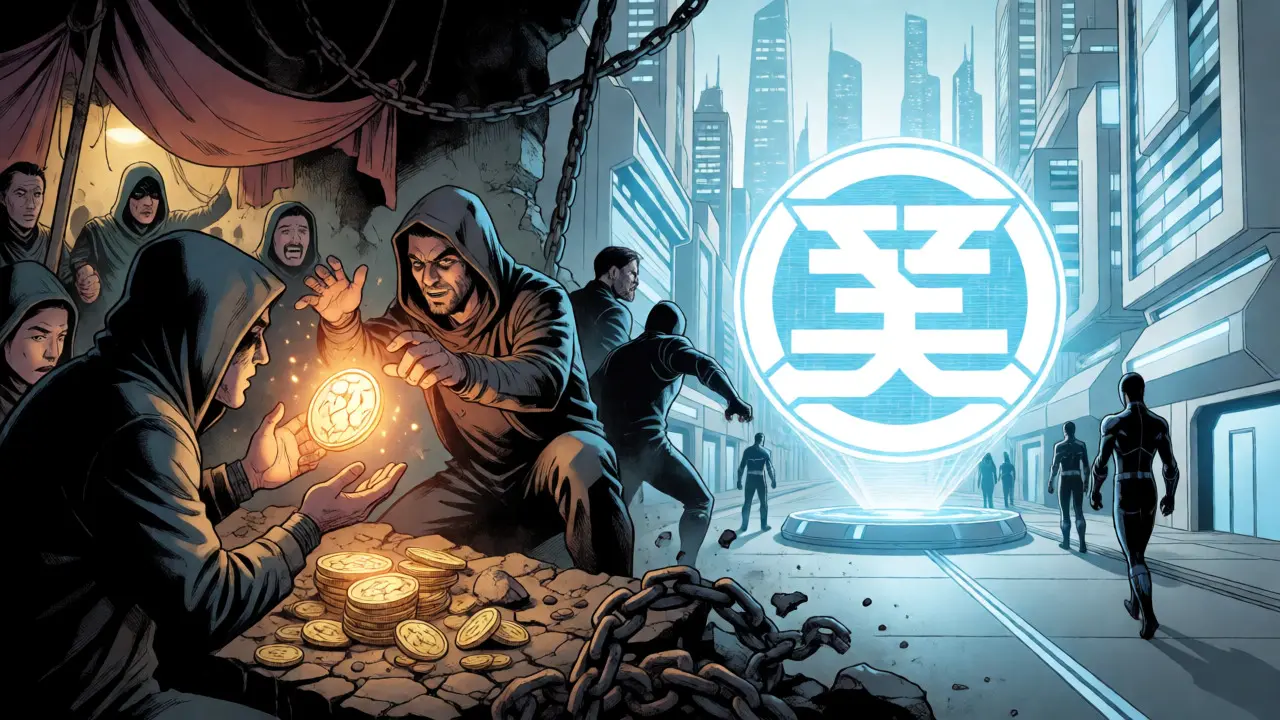
Third, and perhaps most importantly, is the desire for control over the future of money. China wants a digital currency, but they want it centralized. They don’t want a peer-to-peer network where no single entity has authority. They want a system where the state can track every transaction, prevent money laundering, and implement monetary policy instantly. This leads us to the star of the show: the Digital Yuan.
Digital Yuan vs. Bitcoin: The State’s Choice
While Bitcoin is banned, the e-CNY (also known as the Digital Yuan) is thriving. This is China’s Central Bank Digital Currency (CBDC). Unlike Bitcoin, which is decentralized and mined by computers worldwide, the e-CNY is issued directly by the PBOC. It’s digital cash, not a speculative asset.
The distinction is crucial. The Chinese government isn’t against digital technology; they are against decentralization. Blockchain technology itself is encouraged, especially for supply chain tracking and government records. But when that blockchain allows users to transact without bank oversight, it becomes a problem. The e-CNY allows the government to monitor spending patterns, enforce sanctions, and ensure liquidity in the economy without relying on private intermediaries like Alipay or WeChat Pay alone.
| Feature | Bitcoin/Ethereum (Private Crypto) | Digital Yuan (e-CNY) |
|---|---|---|
| Legal Status | Banned/Illegal for trading & holding | Legal Tender |
| Issuer | Decentralized Network | People's Bank of China |
| Anonymity | Pseudonymous | Controlled Anonymity (State visible) |
| Volatility | High | Stable (Pegged to Yuan) |
| Primary Use Case | Speculation/Store of Value | Payments/Settlement |
Enforcement: How Strict Is It Really?
So, what happens if you ignore the ban? Don’t expect a warning letter. The enforcement mechanisms are robust and increasingly punitive. Since 2024, court precedents have set a harsh tone. In one landmark case in Beijing, a man named Liu was sentenced to three and a half years in prison for facilitating crypto transactions involving stolen funds. He sold USDT tokens worth roughly $27,850, knowing the money came from fraud victims. The court ruled that he had concealed criminal proceeds.
This established the "should have known" standard. You can’t claim ignorance if you’re moving large amounts of crypto through channels known to be used for illicit flows. The Ministry of Public Security works alongside the Cyberspace Administration to monitor online activity. Internet companies are required to block content related to crypto trading and report suspicious user behavior. Banks use sophisticated algorithms to flag transfers that look like crypto purchases, often freezing accounts pending investigation.
Mining, too, has been wiped out domestically. After the 2021 ban, major mining pools relocated to countries like Kazakhstan and the United States. Any residual mining operations found in remote provinces face immediate shutdowns and equipment seizures. The grid infrastructure is monitored closely; sudden spikes in power consumption in non-industrial areas trigger inspections.
What About Foreign Exchanges?
A common question among expats and international investors is whether they can use platforms like Binance or Coinbase while physically located in China. Technically, these overseas exchanges are prohibited from serving Chinese residents. However, enforcement against individuals using VPNs to access these sites is less consistent than against businesses. You might still be able to log in, but funding your account via local bank transfer is nearly impossible due to AML checks.
Moreover, the risk isn’t just about having your account frozen. If you’re involved in OTC (Over-The-Counter) trading-buying and selling crypto directly with other people using bank transfers-you’re walking a tightrope. These transactions leave a paper trail in the banking system. If the counterparty is flagged for money laundering, your bank transfer could be investigated, and you could lose access to your fiat currency until the matter is resolved.

Future Outlook: Will the Ban Ever Lift?
As of late 2025 and early 2026, there are whispers of potential softening. Some officials within the Shanghai State-owned Assets Supervision and Administration Commission have held meetings discussing stablecoins and digital currencies. Experts suggest that the rapid evolution of global finance might force a re-evaluation. Could China allow certain types of tokenized assets under strict supervision? Maybe.
But don’t hold your breath for a full return to the free-market crypto days. The political will to maintain capital controls remains strong. The rise of the Digital Yuan gives the state a powerful tool that competes directly with private cryptocurrencies. Why would Beijing allow a competitor that undermines its own digital currency project? The most likely scenario for the next few years is continued restriction, with possible pilots for specific enterprise-grade blockchain applications that don’t involve public trading or speculation.
Key Takeaways for Investors and Residents
- No Trading: Buying, selling, or swapping crypto for fiat is illegal for residents.
- No Mining: Domestic mining operations are shut down; energy policies support this ban.
- Banking Risks: Local banks actively block crypto-related transfers and may freeze accounts.
- Criminal Penalties: Facilitating trades can lead to prison time if linked to money laundering.
- Digital Yuan is King: The state-backed e-CNY is the approved form of digital money.
If you’re planning to visit or live in China, treat crypto as a foreign curiosity rather than a usable asset. Keep your holdings in cold storage abroad, and avoid touching the local financial rails with digital assets. The environment is hostile, and the risks outweigh the rewards for anyone operating within mainland borders.
Can tourists use cryptocurrency in China?
Technically, no. While tourists aren't always prosecuted for minor personal holdings, merchants cannot legally accept crypto payments. Most transactions must be done via Alipay, WeChat Pay, or cash. Using crypto to pay for goods is considered an illegal financial activity.
Is it illegal to hold Bitcoin in China?
As of the 2025 regulations, holding crypto is part of the broader prohibition on crypto activities. While mere possession hasn't always led to arrest, the new framework treats ownership as part of illegal financial activity, especially if linked to trading or investment intent. Courts have denied civil claims regarding crypto ownership, signaling a lack of legal protection.
What is the Digital Yuan (e-CNY)?
The e-CNY is a Central Bank Digital Currency issued by the People's Bank of China. Unlike Bitcoin, it is centralized, stable, and fully backed by the state. It functions as digital cash and is widely accepted for daily transactions across China, serving as the government's preferred alternative to private cryptocurrencies.
Can I mine crypto in China?
No. Crypto mining was banned in 2021 primarily due to high energy consumption and environmental goals. All domestic mining farms were forced to close or relocate to countries like Kazakhstan or the US. Attempting to mine locally now risks equipment seizure and fines.
Are overseas exchanges accessible in China?
Access is restricted. Overseas exchanges are banned from serving Chinese residents. While some users bypass geo-blocks with VPNs, depositing and withdrawing fiat via local banks is difficult because banks monitor and block transactions linked to known crypto platforms.