

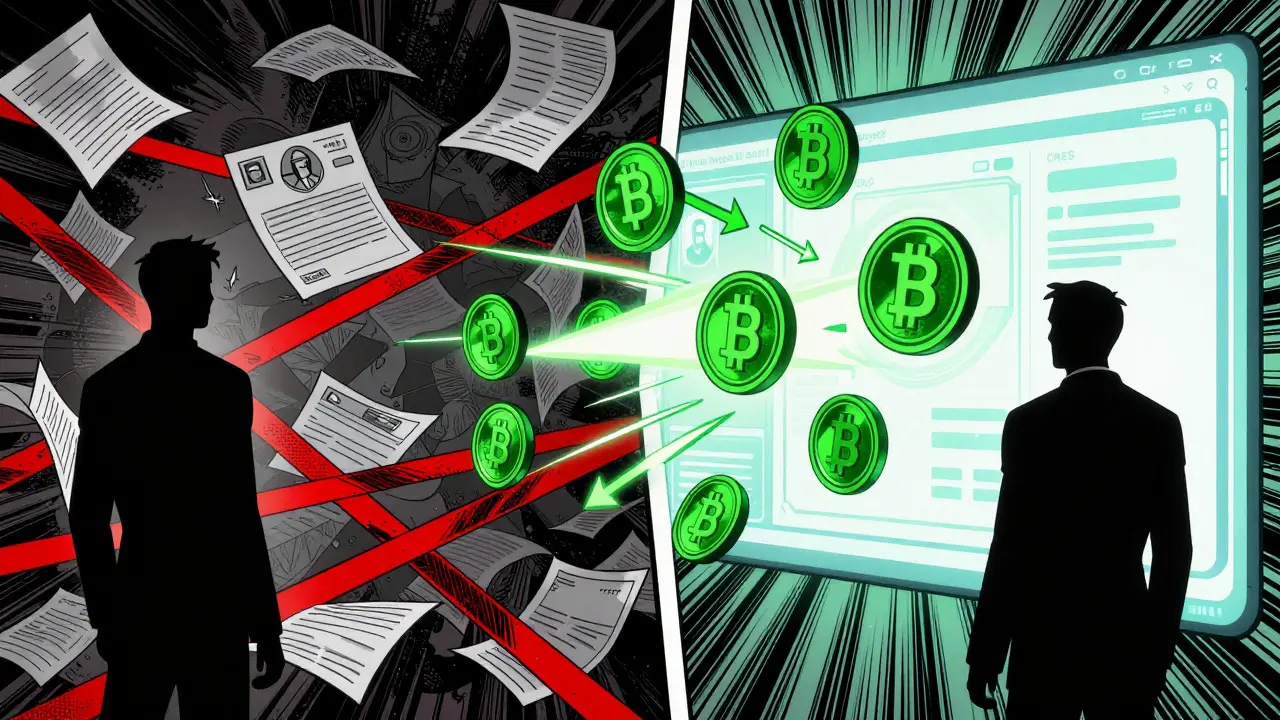
Imagine sending money to a relative abroad or paying for software from overseas. In most countries, you open an app, click send, and it’s done. In Morocco, a North African nation with strict capital controls, that simple act is complicated by a wall of red tape. Since November 2017, the official stance has been clear: cryptocurrency transactions are illegal. Yet, if you walk through the digital streets of Casablanca or Rabat, you’ll find a bustling underground economy where millions rely on digital assets to move money across borders.
This isn’t just about tech enthusiasts hoarding Bitcoin. It’s about survival and efficiency in a system where traditional banking feels like wading through mud. For freelancers, importers, and families receiving remittances, crypto has become the only viable bridge to the global economy. But how do they do it without getting caught? And what happens when the government finally cracks down-or worse, changes its mind?
The Reality of the Ban: Why Moroccans Turn Underground
To understand the behavior, you have to look at the rules. The Central Bank of Morocco, also known as Bank Al-Maghrib, banned cryptocurrencies in 2017. Their reasons were standard but serious: lack of consumer protection, extreme volatility, and fears of money laundering. Governor Abdellatif Jouahri has repeatedly warned citizens that using virtual currencies carries zero legal recourse if things go wrong.
So why ignore the law? Because the alternative is often worse. Traditional banks in Morocco operate under strict foreign exchange controls. If you’re a freelancer earning dollars or euros, converting those funds back into Moroccan Dirhams (MAD) can be a bureaucratic nightmare. You need invoices, proof of service, and sometimes months of waiting. Meanwhile, your client wants to pay quickly. Enter crypto. It bypasses the bank entirely. No middleman, no permission slip, just a wallet address and a private key.
The market data supports this defiance. Despite the ban, projections show the Moroccan crypto market reaching nearly USD 292 million by 2026. That’s not pocket change. It’s a massive underground ecosystem fueled by necessity. People aren’t doing this for fun; they’re doing it because the current financial infrastructure doesn’t serve their needs.
How the Underground Network Actually Works
You won’t find a licensed crypto exchange in Morocco. So, how does the money move? The answer lies in peer-to-peer (P2P) networks and informal trust circles. Here is the typical workflow for a Moroccan user wanting to send or receive international payments:
- Finding a Counterparty: Users rely on P2P platforms like Binance P2P or local Telegram groups. These aren’t official exchanges; they are bulletin boards where individuals list offers to buy or sell USDT (Tether) or Bitcoin.
- Escrow Protection: On reputable P2P platforms, the platform holds the crypto in escrow. The buyer sends fiat currency via bank transfer or mobile payment to the seller’s personal account. Once the seller confirms receipt, the platform releases the crypto to the buyer.
- Cash-Out Points: For larger amounts, users might meet in person or use trusted intermediaries. This is risky but common. Some small businesses unofficially accept crypto for goods, acting as de facto ATMs.
- Cross-Border Transfer: Once the user has stablecoins (like USDT), they can send them instantly to anyone in the world. The recipient can then cash out locally using their own country’s methods.
The key here is USDT, a stablecoin pegged to the US Dollar. Moroccans prefer stablecoins over volatile assets like Bitcoin for payments. Why? Because they want predictability. If you’re paying for a server or sending rent money, you don’t want the value to drop 10% while the transaction processes. USDT provides the speed of crypto with the stability of fiat.
| Feature | Traditional Bank Transfer | P2P Crypto Payment |
|---|---|---|
| Speed | 3-5 business days | Minutes to hours |
| Cost | High fees + spread markup | Low network fees + P2P premium |
| Legal Status | Fully Legal | Technically Illegal |
| Consumer Protection | Yes (Bank guarantees) | No (User risk) |
| Bureaucracy | High (Invoices, approvals) | None (Wallet to Wallet) |
The Government’s Double Game: Ban vs. CBDC
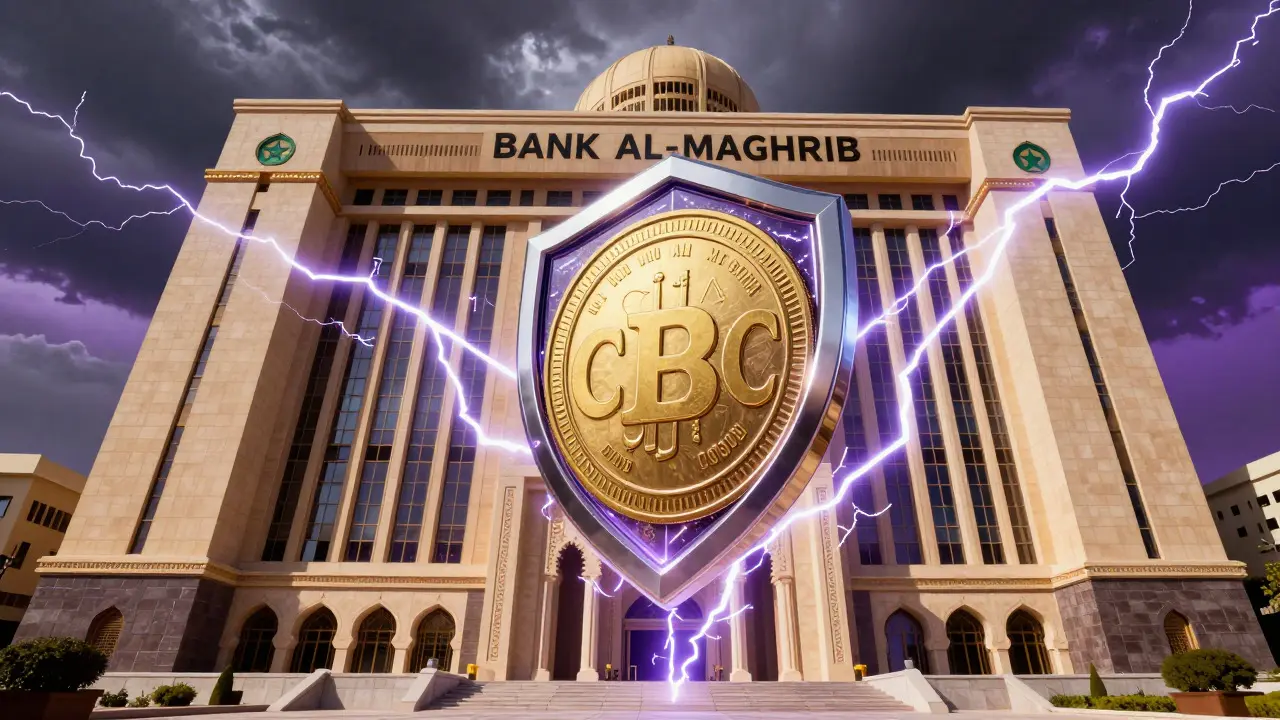
Here is where it gets interesting. While Bank Al-Maghrib bans private crypto, it is simultaneously building its own version. This is the concept of a Central Bank Digital Currency (CBDC). Governor Jouahri has disclosed that Morocco is collaborating with the IMF and World Bank to develop a national digital currency.
Why the contradiction? The government sees the benefits of blockchain technology-speed, lower costs, transparency-but hates the lack of control. A CBDC allows them to have their cake and eat it too. They get the efficiency of digital payments without the decentralization that threatens their monetary sovereignty.
Morocco is even partnering with Egypt’s central bank to test cross-border CBDC transfers. Imagine a future where a Moroccan sends money to an Egyptian friend instantly, without touching a commercial bank, but still fully regulated by the state. This suggests the ban on private crypto might be temporary-a holding pattern until the state’s own digital solution is ready.
Risks You Can’t Ignore
If you are considering using crypto for international payments in Morocco, you need to know the dangers. It’s not all smooth sailing. The absence of regulation means the absence of safety nets.
- Scams are Rampant: Without legal oversight, bad actors thrive. Fake P2P sellers who take your bank transfer and disappear are a constant threat. Always use platforms with escrow services.
- Account Freezes: Banks monitor unusual activity. If your account suddenly receives multiple small transfers from different individuals (common in P2P trading), the bank may freeze your account for suspicion of money laundering. Getting it unfrozen requires proving the source of funds, which can be difficult if the source is "crypto".
- Volatility Risk: Even if you use stablecoins, there is counterparty risk. What if the issuer of the stablecoin fails? You have no insurance.
- Legal Uncertainty: The law says it’s illegal. While enforcement is currently lax for small personal transactions, the threat of prosecution looms. Large-scale traders are more vulnerable than casual users.
The Shift in 2025-2026: Is Legalization Coming?
There are signs that the tide is turning. In July 2025, the Central Bank announced a draft law to legalize and regulate cryptocurrencies. This was a seismic shift. It suggests that the government recognizes the inevitability of crypto adoption and wants to bring it into the light rather than fight a losing battle.
If this draft becomes law, we could see licensed exchanges operating in Morocco. This would mean:
- KYC/AML Compliance: Users would need to verify identities, reducing anonymity but increasing security.
- Taxation: Gains and transactions might become taxable, adding a new cost layer.
- Better Integration: Banks might eventually offer crypto custody services, merging the old world with the new.
Until then, the market remains in a grey zone. The growth to USD 292 million by 2026 indicates that demand is outpacing regulation. Moroccans are voting with their wallets, demanding access to global finance regardless of the legal hurdles.
Practical Steps for Safe Transactions
If you must navigate this landscape, follow these practical tips to minimize risk:
- Stick to Reputable P2P Platforms: Avoid direct Telegram trades unless you know the person personally. Use platforms with dispute resolution mechanisms.
- Use Stablecoins: Stick to USDT or USDC for payments. Avoid Bitcoin or Ethereum for daily transactions due to price swings.
- Keep Records: Save every invoice, chat log, and transaction hash. If your bank freezes your account, documentation is your best defense.
- Diversify Exit Routes: Don’t rely on one bank account for cashing out. Rotate accounts to avoid triggering anti-money laundering flags.
- Stay Updated: Follow announcements from Bank Al-Maghrib. The regulatory landscape is changing fast, especially with the 2025 draft law.
Is it illegal to hold cryptocurrency in Morocco?
Technically, yes. The 2017 ban declared all cryptocurrency transactions illegal. However, enforcement primarily targets large-scale exchanges and institutional players. Individual holders face less scrutiny, though the legal risk remains.
Can I use Binance in Morocco?
Binance is accessible, but it is not officially licensed. Many Moroccans use Binance P2P to trade USDT for MAD. Be aware that using unlicensed platforms carries regulatory risks.
What is the difference between the CBDC and Bitcoin?
A CBDC is issued and controlled by the Central Bank, making it centralized and regulated. Bitcoin is decentralized, meaning no single entity controls it. The CBDC aims to provide the speed of crypto with the stability of fiat currency.
Will the crypto ban be lifted soon?
There is hope. The draft law announced in July 2025 suggests a move toward regulation rather than prohibition. However, final implementation details and timelines are still unclear.
Are my funds safe if a P2P seller scams me?
If you use a platform with escrow, you can file a dispute. If you trade directly (peer-to-peer without a platform), you likely have no recourse. Always prioritize platforms with buyer protection features.