

Imagine buying a ticket to a movie that ended three years ago. That’s roughly the experience of looking at HashBridge Oracle (HBO) today. Launched in 2021 on the Huobi ECO Chain, this cryptocurrency promised to solve one of blockchain’s oldest problems: getting real-world data onto the chain reliably. Fast forward to September 2026, and you’re left with a token ranked #6159 globally, zero daily trading volume, and a market cap that looks more like a rounding error than a financial asset.
If you’ve stumbled upon HBO while digging through low-cap gems or saw it flash in your wallet history, you’re probably asking: what is this thing, and does it actually do anything? This guide cuts through the noise. We’ll look at what HashBridge Oracle was supposed to be, why its numbers don’t add up, and whether there’s any reason to care about it now.
The Core Promise: A Bridge for Data
At its heart, HashBridge Oracle is a decentralized oracle service designed to feed external data into smart contracts. In simple terms, blockchains are isolated islands. They can’t see the price of Bitcoin on Coinbase, the weather in Tokyo, or the score of a football match without help. Oracles provide that help. They act as messengers, bringing off-chain data on-chain so applications can function.
HBO claimed to offer a "whole set of technical solutions" including community nodes, institutional nodes, price feeds, and an arbitration system to resolve disputes when data sources disagreed. The idea wasn’t new-Chainlink had been doing this for years-but HBO pitched itself as a niche alternative specifically for the Huobi ecosystem.
How It Was Supposed to Work
- Data Request: A dApp asks for specific data (e.g., ETH/USD price).
- Node Response: Community and institutional nodes submit their version of the data.
- Aggregation: Smart contracts combine these inputs using weighted averages.
- Incentives: Honest nodes earn rewards; dishonest ones face penalties.
On paper, this sounds solid. In practice, the execution fell apart almost immediately after launch.
The Reality Check: Numbers That Don’t Add Up
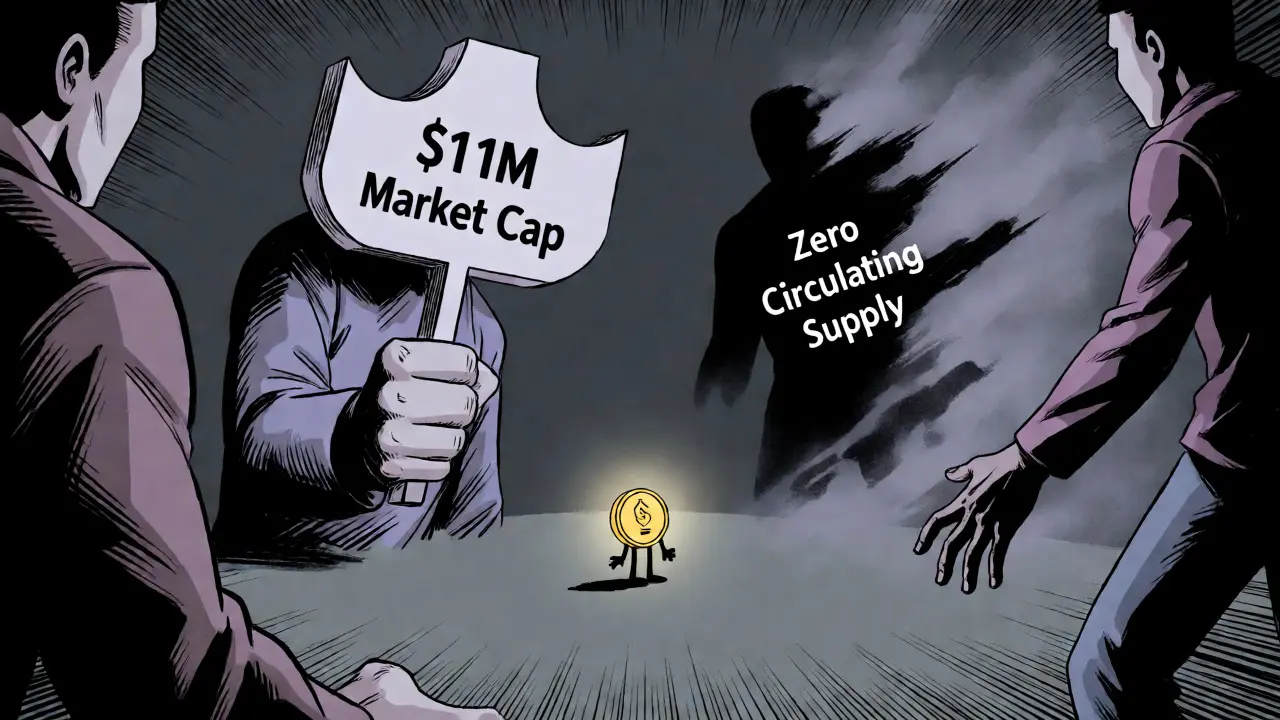
Here’s where things get weird. If you check major aggregators today, you’ll find conflicting data that makes HBO look like a ghost town. As of early 2026, Coinbase lists a market capitalization of roughly $11 million, yet simultaneously reports a circulating supply of zero. How can you have an $11 million value if no tokens are circulating? Meanwhile, CoinMarketCap lists the market cap as $0 because it recognizes the lack of active supply.
This discrepancy isn’t just a data glitch; it signals a deeper issue. The total supply is fixed at 1 billion HBO tokens, but only 24,810 holders exist. More critically, Etherscan-style explorers for the Huobi ECO Chain show that 87% of these tokens sit in just ten wallets. This extreme concentration means the "market" is essentially controlled by a handful of people, making price discovery nearly impossible.
| Metric | HashBridge Oracle (HBO) | Chainlink (LINK) |
|---|---|---|
| Global Rank | #6159 | #18 |
| Market Cap | ~$11M (disputed) | >$7 Billion |
| 24h Volume | $0 | >$100 Million |
| Blockchain | Huobi ECO Chain (HECO) | Multi-chain |
| Active Integrations | 0 documented | 1,200+ |
Why Liquidity Is Non-Existent
You might think, "Okay, the numbers are messy, but maybe I can still buy some cheap tokens." Try it. You’ll likely fail. Coinbase reports $0 trading volume over the last 24 hours. Binance shows 0% price change across all timeframes. This isn’t just low activity; it’s total stagnation.
User experiences reflect this. Reddit threads from January 2026 describe users trying to sell 10,000 HBO tokens and seeing their orders sit unfilled for days. One user, u/CryptoLoser2025, noted, "Tried to sell... zero buyers." When a token has no liquidity, its price is theoretical. You can own it, but you can’t exit.
The problem stems from its exclusive reliance on the Huobi ECO Chain (HECO). While HECO had its moment in the sun during the DeFi summer of 2021, it has since faded. Unlike Chainlink, which operates across Ethereum, Polygon, Arbitrum, and dozens of other chains, HBO never expanded beyond HECO. With HECO’s activity dwindling, HBO became stranded on a sinking ship.
Development Status: Abandoned or Just Quiet?
Let’s talk about development. In crypto, silence usually equals death. For HashBridge Oracle, the silence is deafening. There are no active GitHub repositories with recent commits. No developer documentation is publicly available. The official website link on Coinbase redirects to a generic Huobi domain with no specific content about HashBridge.
Community engagement tells a similar story. The official Telegram group went inactive in December 2023. There’s no verified Twitter/X presence. Messari’s Crypto Viability Index assigned HBO a "critical risk" rating-the lowest possible tier-citing zero meaningful activity for over 18 months. CoinDesk even added it to its "Project Graveyard" database, categorizing it as "Effectively Dead."
Compare this to competitors like Band Protocol or Pyth Network, which are actively shipping updates, expanding integrations, and engaging with developers. HBO hasn’t shipped a new feature since its initial launch phase.
The Price History: A Cautionary Tale
If you bought HBO at its peak, you’re holding a heavy bag. On February 21, 2021, HBO hit an all-time high of $94.79. By February 2026, it traded around $0.0110. That’s a decline of 99.99%. Yes, four nines.
Some analysts point to a 711% annual growth rate cited by Coinbase as a sign of recovery. But look closer. That growth came from a base of $0.0014. Moving from $0.0014 to $0.0110 doesn’t mean the project is healthy; it means someone, somewhere, bought a few tokens. Without volume, percentage gains are meaningless. CoinTelegraph analysts correctly identified this pattern as typical of speculative pumps in microcap tokens rather than sustainable value creation.

Who Actually Holds HBO?
Understanding who holds the tokens reveals why the project stalled. Data suggests that 63% of transactions originate from Southeast Asia, a region known for high retail interest in low-priced altcoins. However, the top 10 wallets hold 87% of the supply. This creates a classic "whale" dynamic. If those ten whales decide to dump, the price collapses further. If they hold, nothing happens because no one else is trading.
There’s no evidence of enterprise adoption. Gartner’s 2025 Blockchain in Business report doesn’t mention HBO. Deloitte’s surveys ignore it. Decentralized applications (dApps) aren’t using it. State of the DApps tracking shows zero integrations as of January 2026. Without dApps needing data, the oracle has no customers. Without customers, there’s no fee revenue. Without revenue, there’s no incentive for nodes to stay online.
Is There Any Value Left?
So, should you care about HashBridge Oracle? For most investors, the answer is no. It serves as a case study in how not to launch a utility token. It entered a crowded market late, failed to differentiate technically, chose a declining blockchain ecosystem, and vanished before establishing real use cases.
The only potential upside is pure speculation. If the Huobi ECO Chain experiences a sudden resurgence and someone revives the HBO project with fresh funding and development, the current low price could offer leverage. But betting on a zombie project returning to life is like waiting for a dial-up modem to beat fiber optics-it’s technically possible, but highly improbable.
If you already hold HBO, consider it a sunk cost. Selling may be difficult due to lack of buyers, but holding offers little hope for appreciation. If you’re researching it for a portfolio, skip it. There are dozens of other oracle projects with active communities, transparent roadmaps, and measurable usage metrics.
What is HashBridge Oracle used for?
HashBridge Oracle (HBO) was designed to provide decentralized data feeds to smart contracts on the Huobi ECO Chain. Its goal was to allow decentralized applications to access real-world information like prices and events securely.
Is HashBridge Oracle still active?
Practically speaking, no. Development activity ceased around 2021-2022, community channels are inactive, and there are no recent code commits or product updates. Major trackers classify it as abandoned or effectively dead.
Why is HBO trading volume zero?
The token suffers from extreme illiquidity. Most exchanges list it with minimal order books, and the majority of tokens are held by a small number of wallets. Without active buyers and sellers, trading volume drops to near zero.
Can I still buy HashBridge Oracle?
Technically yes, but it’s difficult. You need a wallet compatible with the Huobi ECO Chain (like MetaMask configured for HECO) and access to a decentralized exchange on that network. However, slippage may be high, and selling later may prove equally hard.
How does HBO compare to Chainlink?
Chainlink is the dominant oracle provider with billions in market cap and thousands of integrations. HBO is a microcap token with negligible usage, single-chain dependency, and no significant developer activity. They operate in vastly different tiers of the market.