
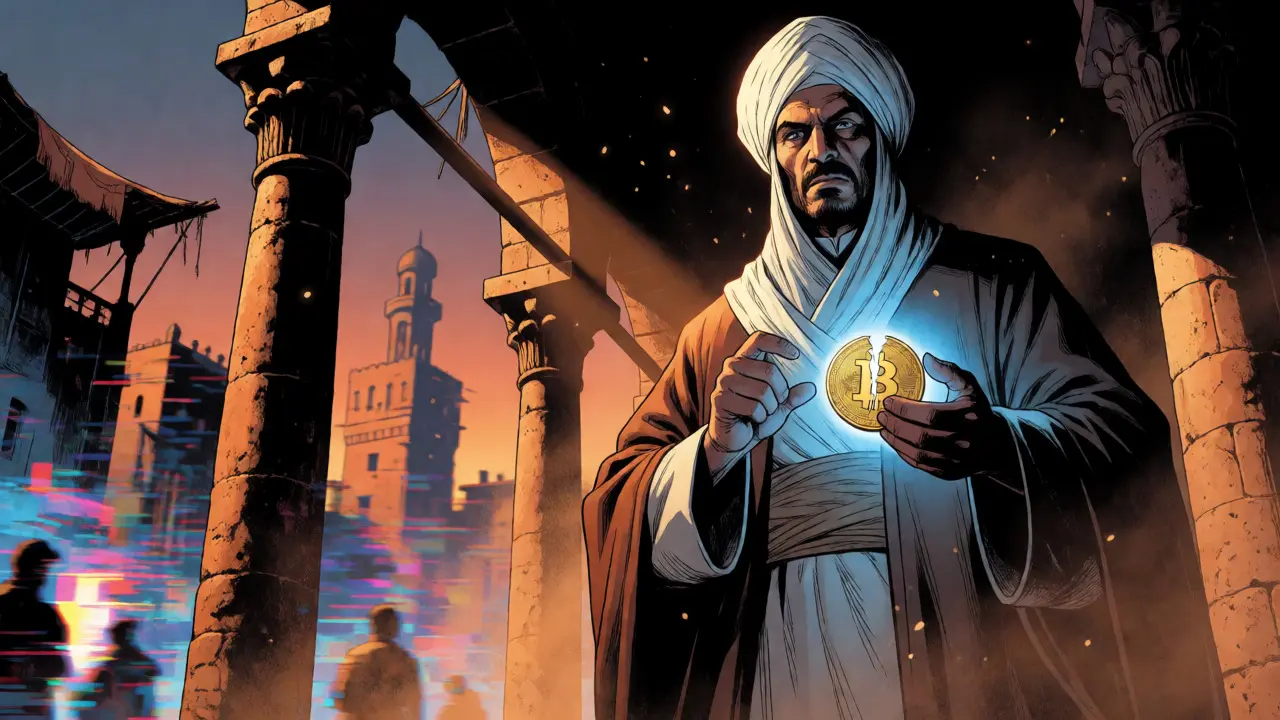
Imagine trying to buy a coffee with Bitcoin in Cairo and being told it’s not just risky-it’s religiously forbidden. That’s the reality for millions of Muslims following the ruling from Egyptian Grand Mufti Dr. Shawky Ibrahim Allam. In December 2017, his office issued a definitive fatwa declaring Bitcoin and all cryptocurrencies haram. This wasn’t a quiet suggestion; it was a hard ban on buying, selling, or even holding digital coins. If you’re an investor or just curious about how religion intersects with modern tech, this ruling is a massive puzzle piece.
The Core Ruling: What Exactly Is Forbidden?
Let’s cut through the noise. The fatwa didn’t just say “be careful.” It said “stop.” Under the guidance of Dar Al-Ifta, Egypt’s premier institution for Islamic legal opinions, any transaction involving cryptocurrency is invalid under Sharia law. This includes trading on exchanges, using Bitcoin as payment, and even subscribing to crypto-based services.
Why so strict? The reasoning hinges on two major Islamic financial principles: gharar (excessive uncertainty) and the lack of sovereign backing. For something to be valid currency in Islam, it usually needs stability and recognition by authorities. Bitcoin, according to the Mufti, has neither. It’s described as having "elements of uncertainty and ignorance" that make contracts unclear. If you don’t know what you’re getting or if the value will vanish tomorrow, is it really money? The Egyptian stance says no.
Security Concerns: More Than Just Money
It’s not just about theology. The fatwa highlights real-world risks. It explicitly mentions that Bitcoin facilitates illegal activities. We’re talking about money laundering, drug dealing, and funding extremist groups like ISIS. When cash flows anonymously across borders without central oversight, governments get nervous. And rightly so.
The ruling points out that Bitcoin bypasses central banks and security authorities. This decentralization, often praised by tech enthusiasts as a feature, is seen here as a bug. It creates a blind spot for regulators. If a criminal moves funds via blockchain, who stops them? Who taxes them? The absence of a "central regulatory authority" makes consumer protection nearly impossible. For a country managing economic stability, this unpredictability is a threat.

The Great Divide: Why Other Scholars Disagree
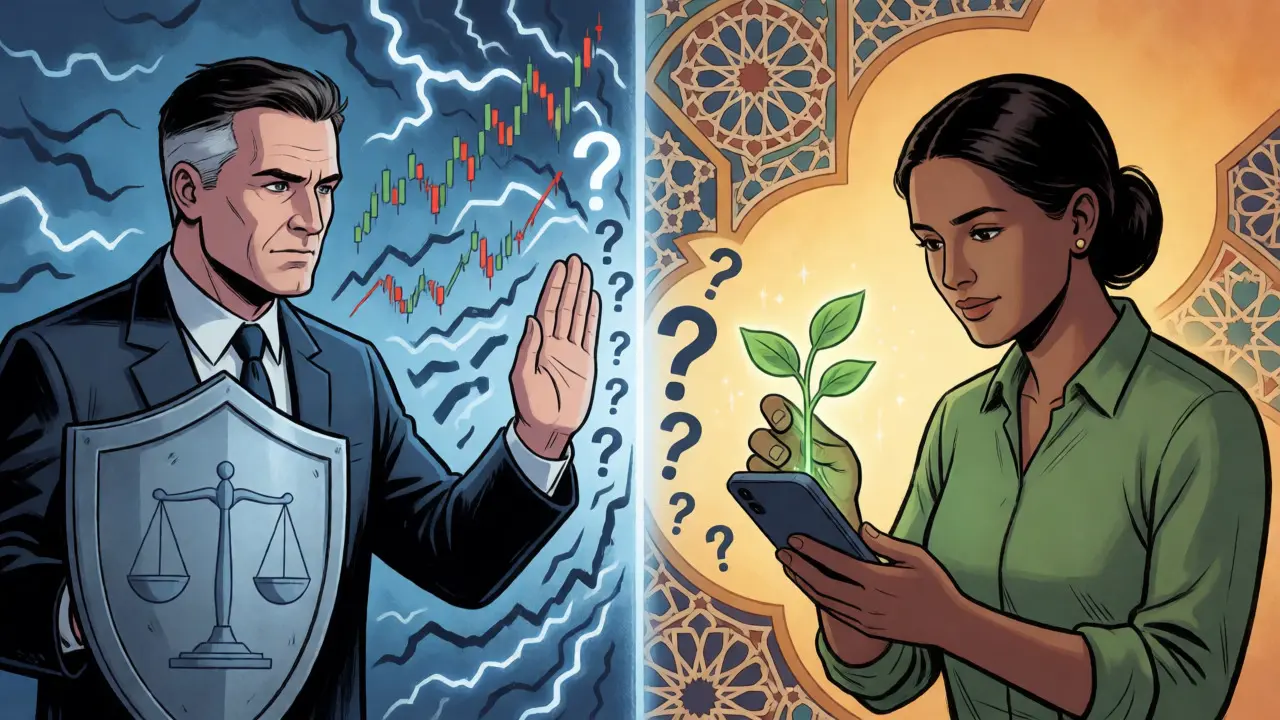
Here’s where it gets interesting. Not everyone agrees with Egypt. While the Syrian Islamic Council shares similar concerns, other prominent scholars see things differently. Take Mufti Faraz Adam, a leading voice in Islamic fintech. He argues that we should look at utility. If people accept Bitcoin as payment, does it function as money? His view suggests that classical scholars judge things by their effects. If a digital asset works as a medium of exchange, it might be permissible.
This clash isn’t just academic. It affects your wallet. One scholar says “don’t touch it,” while another says “it’s fine if you screen the coins.” How do you choose? You have to weigh the source of authority against the evolving nature of technology. Egypt’s position is conservative and protective. Others are progressive and functional. There is no single "Islamic answer" yet-just a spectrum of interpretations.
Practical Implications for Muslim Investors
If you follow the Egyptian fatwa, your options shrink. You can’t trade Bitcoin, Ethereum, or altcoins. You can’t mine them. You can’t accept them for freelance work. This isolates you from a growing global market. But if you follow more permissive views, you still have rules. You must ensure the coin itself isn’t tied to gambling or interest-based lending. You also need to pay zakat (charitable tax) on your holdings, treating them like cash.
| Authority/Viewpoint | Status of Bitcoin | Key Reasoning | Permitted Activities |
|---|---|---|---|
| Egyptian Grand Mufti | Haram (Forbidden) | Uncertainty (Gharar), lack of state backing, security risks | None |
| Mufti Faraz Adam | Halal (Permissible) with conditions | Functional utility, digital asset classification | Trading, holding, paying zakat |
| Syrian Islamic Council | Haram (Forbidden) | Lack of regulation, speculative nature | None |
| General Progressive View | Case-by-case | Depends on underlying project utility | Screened investments only |
Does This Apply to New Tech Like CBDCs?
Crypto has changed since 2017. Central Bank Digital Currencies (CBDCs) are now rolling out globally. These are digital dollars or pounds, backed by governments. Do they fix the problems cited in the fatwa? Likely yes. They remove the anonymity risk and add state backing. However, the original fatwa’s language is broad. Until Dar Al-Ifta issues a new statement, many Egyptians remain cautious. Technology moves fast, but religious rulings move slowly. Don’t assume old bans automatically lift for new innovations without explicit approval.
What Should You Do Now?
If you’re a Muslim investor, start by identifying which scholarly opinion you trust. Are you aligned with traditional institutional authority like al-Azhar, or do you prefer independent contemporary analysis? Next, audit your portfolio. If you hold Bitcoin and follow the Egyptian ruling, consider divesting. If you follow permissive views, check if your coins involve interest-bearing mechanisms. Finally, keep learning. This field evolves weekly. What’s haram today might be re-evaluated tomorrow as regulations tighten and tech matures.
Is Bitcoin haram in all Muslim countries?
No. While Egypt and Syria have declared it haram, other countries like Malaysia and Bahrain have taken more flexible approaches. Some allow trading if specific Sharia-compliance criteria are met. There is no unified global Islamic ruling on cryptocurrency.
Can I use Bitcoin for charity if it's haram?
According to the Egyptian fatwa, since the currency itself is considered invalid property, transactions involving it are problematic. Most scholars following this view would advise converting crypto to fiat currency before donating to ensure the charity is pure and acceptable.
Did the fatwa change after Bitcoin's price crashed?
The core ruling remains unchanged as of 2026. The fatwa was based on structural issues like lack of regulation and uncertainty, not just price volatility. While some discussions have occurred regarding newer technologies, the fundamental prohibition on standard cryptocurrencies stands.
Are stablecoins like USDT also haram?
Many scholars extend the prohibition to stablecoins if they share the same decentralized, unregulated nature as Bitcoin. However, some argue that if a stablecoin is fully backed by reserves and regulated, it may be viewed differently. Check with local scholars for specific guidance on individual tokens.
What is the role of 'Gharar' in this decision?
Gharar refers to excessive uncertainty in a contract. The fatwa argues that because Bitcoin's value fluctuates wildly and its future acceptance is uncertain, it introduces too much gharar into financial agreements, making them invalid under Islamic law.