

Remember when sending Bitcoin felt like slipping a cash envelope into a mailbox? That era is officially over. By mid-2026, the dream of anonymous, borderless crypto transfers has collided with a massive wall of international regulation. If you are moving significant amounts of digital assets across borders, someone is watching. It is not just your local exchange; it is a coordinated network of global authorities sharing data in real-time.
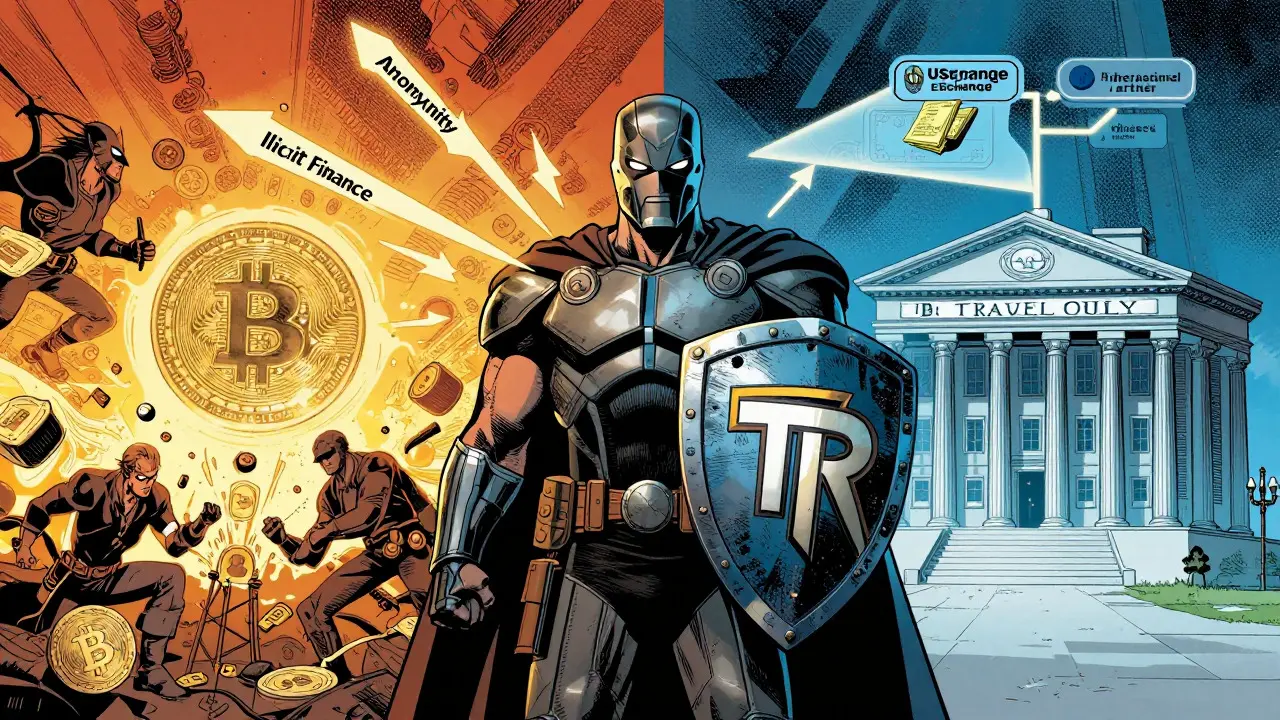
The landscape has shifted dramatically from the "wild west" days of early cryptocurrency. Today, Cross-border crypto monitoring is a comprehensive regulatory framework enforced by international bodies to track digital asset flows and prevent illicit finance. This system relies on strict Anti-Money Laundering (AML) rules, the implementation of the FATF Travel Rule, and bilateral cooperation between major economies like the US and UK. For users and businesses, this means that privacy is no longer guaranteed by default, and compliance is the new baseline for operating in the crypto space.
The End of Anonymity: Understanding the Travel Rule
At the heart of modern crypto surveillance is the Travel Rule, which is a standard set by the Financial Action Task Force (FATF) requiring Virtual Asset Service Providers to share originator and beneficiary information for transactions above a specific threshold. In the United States, this falls under the Bank Secrecy Act, managed by the Financial Crimes Enforcement Network (FinCEN).
Here is how it works in practice. If you send $3,000 or more of crypto to another wallet via an exchange or custodian, that provider must collect and transmit personally identifiable information (PII). This includes:
- The name and address of the sender (originator).
- The name and address of the receiver (beneficiary).
- The account numbers or wallet addresses involved.
- The transaction amount and date.
This data isn't just stored locally. It travels with the transaction. When a US-based exchange sends funds to an exchange in Japan or Europe, they use secure channels to pass this identity data along. The goal is simple: make crypto transfers look as transparent as traditional wire transfers. If you try to move money through a chain of exchanges without providing this info, the transaction gets flagged or rejected before it even hits the blockchain.
US Regulatory Pressure: FinCEN and the Unhosted Wallet Crackdown
The United States has taken an aggressive stance in 2025 and 2026. FinCEN’s proposed rules have tightened the noose around what regulators call "unhosted wallets." These are self-custody wallets where you hold your own private keys, rather than leaving funds on an exchange.
Previously, banks could often ignore these wallets if they didn't know who owned them. Now, the proposal requires banks and Money Service Businesses (MSBs) to verify customer identity and report transactions involving convertible virtual currency (CVC) held in unhosted wallets. Essentially, cryptocurrencies like Bitcoin and Ether are being treated as "monetary instruments" similar to cash or traveler's checks.
If you withdraw funds from a bank account to buy crypto using an unhosted wallet, your bank now has to ask tough questions. Who owns that wallet? Where is it hosted? Is it linked to a sanctioned jurisdiction? This bridges the gap between traditional banking and the decentralized world, forcing financial institutions to extend their Know Your Customer (KYC) protocols deeper into the crypto ecosystem.
European Union: The MiCA Standard
While the US focuses on enforcement and reporting, the European Union has built a comprehensive legislative framework known as Markets in Crypto-Assets (MiCA), which is the EU's unified regulatory regime for crypto-assets, focusing on consumer protection, market integrity, and financial stability. Implemented fully by 2024 and refined in 2025, MiCA sets a high bar for compliance.
Under MiCA, any Crypto-Asset Service Provider (CASP) operating in the EU must maintain robust financial crime controls. This goes beyond basic AML checks. CASPs must perform enhanced due diligence on customers, continuously monitor transactions for suspicious patterns, and report anomalies immediately. The approach is risk-based but strictly enforced.
MiCA also introduces strict requirements for stablecoin issuers. Since stablecoins are heavily used for cross-border payments, the EU wants to ensure that every europegged token is backed by safe, liquid assets and that its issuer can be held accountable. This creates a "passport" system: once a company is licensed in one EU member state, it can operate across the entire bloc, but it must adhere to the same rigorous monitoring standards everywhere.
Global Cooperation: The UK-US Transatlantic Task Force
Regulation doesn't stop at national borders. Recognizing that crypto is inherently global, the UK and US established the UK-US Transatlantic Task Force, which is a bilateral initiative aimed at aligning regulatory frameworks, licensing standards, and cross-border compliance measures for digital assets. This partnership is shaping global norms.
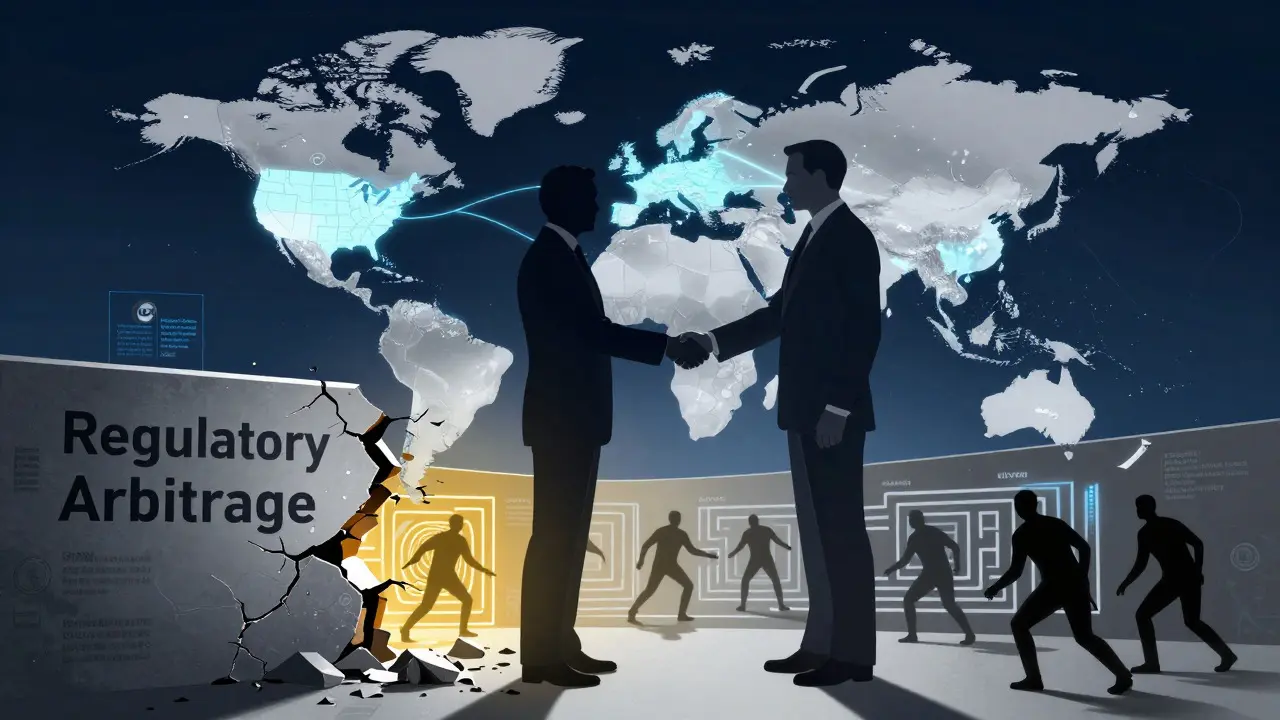
The task force focuses on key areas like custody standards, stablecoin regulations, and disclosure requirements. By coordinating their approaches, the UK and US aim to prevent "regulatory arbitrage," where bad actors simply move their operations to the least regulated country. Their collaboration serves as a template for other nations, encouraging a unified front against illicit finance.
This cooperation extends to intelligence sharing. Law enforcement agencies in both countries work together to trace funds linked to terrorism financing, sanctions evasion, and large-scale fraud. If a sanctioned entity tries to hide behind a shell company in London while trading on a platform in New York, the joint oversight makes it significantly harder to succeed.
| Region/Body | Key Regulation/Initiative | Primary Focus | Transaction Threshold |
|---|---|---|---|
| United States | Bank Secrecy Act / FinCEN Rules | AML/CFT, Reporting, Unhosted Wallets | $3,000 (Travel Rule) |
| European Union | Markets in Crypto-Assets (MiCA) | Licensing, Consumer Protection, Stablecoins | Risk-Based (Enhanced Due Diligence) |
| International | FATF Travel Rule | Data Sharing Between VASPs | $1,000 (Recommended Global Standard) |
| UK-US Joint | Transatlantic Task Force | Harmonization, Intelligence Sharing | N/A (Policy Coordination) |
How Bad Actors Try to Evade Monitoring
Despite these tight nets, criminals adapt. The UK's Office of Financial Sanctions Implementation (OFSI) identified several critical vulnerabilities in their 2025 threat assessment. Here are the common tactics used to bypass monitoring:
- VPN Obfuscation: Users employ Virtual Private Networks to mask their true geographic location, making it difficult for exchanges to determine which jurisdiction's laws apply.
- Intermediary Wallets: Sanctioned entities use layers of intermediary wallets to separate incoming deposits from outgoing withdrawals. This breaks the direct link between the sender and receiver, confusing automated compliance software.
- Non-KYC Exchanges: Instant swap services that don't require identity verification are used to convert fiat to crypto quickly, allowing funds to enter the blockchain anonymously before being moved to more complex mixing tools.
- Cross-Chain Layering: Assets are moved across different blockchain networks (e.g., from Ethereum to Solana via a bridge) to complicate tracing efforts.
These methods highlight why technology alone isn't enough. Regulators are increasingly relying on behavioral analysis and partnerships with blockchain analytics firms to spot these patterns. If your transaction history looks like a maze designed to confuse auditors, you will likely get flagged.
Practical Implications for Users and Businesses
So, what does this mean for you? If you are an individual user, expect stricter KYC processes. Signing up for a new exchange will feel more like opening a bank account. You will need to provide government ID, proof of address, and sometimes even source-of-funds documentation for larger deposits.
For businesses, especially those dealing with B2B payments or cross-border remittances, compliance is a operational necessity. Working with licensed Crypto Asset Service Providers (CASPs) is crucial. These providers act as intermediaries that handle the heavy lifting of AML checks. However, you still need to conduct due diligence on your partners. Just because an exchange is licensed doesn't mean their monitoring systems are bulletproof.
Consider the cost of non-compliance. Penalties for violating Travel Rule requirements or failing to report suspicious activity can be severe, ranging from heavy fines to loss of license. In extreme cases, individuals can face criminal charges. The message from regulators is clear: transparency is mandatory.
The Future of Crypto Surveillance
Looking ahead, the trend is toward greater standardization and automation. As central banks explore Central Bank Digital Currencies (CBDCs), the infrastructure for tracking digital value will become even more integrated with traditional finance. With 91% of central banks already exploring digital currencies, the lines between fiat and crypto are blurring.
Technology will play a bigger role. RegTech solutions are becoming smarter, using AI to analyze blockchain data in real-time. This means false positives may decrease, but detection rates for sophisticated laundering schemes will increase. The "set it and forget it" mentality of early crypto adoption is gone. Continuous monitoring is the new norm.
Ultimately, cross-border crypto monitoring is here to stay. It represents a compromise: sacrificing some degree of privacy for greater security and legitimacy. As the industry matures, those who embrace compliance will thrive, while those trying to hide in the shadows will find themselves increasingly isolated.
What is the Travel Rule threshold for crypto transactions?
In the United States, the threshold is $3,000 for transactions between Virtual Asset Service Providers (VASPs). However, the FATF recommends a global standard of $1,000. Many jurisdictions are moving toward lower thresholds to enhance monitoring capabilities.
Are unhosted wallets completely banned?
No, unhosted wallets are not banned. However, transactions involving them are subject to increased scrutiny. Banks and MSBs must verify the identity of the wallet owner and report suspicious activities related to these wallets under new FinCEN proposals.
How does MiCA affect crypto businesses outside the EU?
If a business wants to serve customers in the EU, it must comply with MiCA. This means obtaining a license from an EU member state or partnering with a licensed EU provider. Non-compliant businesses risk being blocked from accessing the European market.
What happens if I fail to provide PII for a large transfer?
The receiving VASP will likely reject the transaction or freeze the funds until the required information is provided. Repeated failures can lead to account suspension or closure by your home exchange.
Is cross-border crypto monitoring effective against mixers?
Mixers remain a challenge, but regulators are targeting the entry and exit points. Most centralized exchanges now block deposits from known mixer addresses. Additionally, blockchain analytics firms are improving their ability to de-anonymize mixer outputs through heuristic analysis.
Matt Kay
July 30, 2026 AT 17:43its all bs
Carl Michaud
July 31, 2026 AT 05:46The sheer audacity of these regulatory bodies to impose such draconian measures on the decentralized ethos is nothing short of a coordinated assault on individual sovereignty. They claim it is for security, but we all know this is merely a mechanism to centralize control and stifle innovation under the guise of compliance. The 'Travel Rule' is simply a digital panopticon designed to erode privacy rights systematically. By forcing VASPs to share PII, they are creating a honeypot of data that will inevitably be breached or misused by authoritarian regimes. It is not about stopping crime; it is about establishing total surveillance capitalism where every transaction is logged, analyzed, and monetized by state actors and their corporate proxies. The unhosted wallet crackdown is particularly insidious because it targets the very foundation of self-custody, which is the bedrock of financial freedom. If you cannot hold your own keys without being subjected to endless KYC hurdles, you do not truly own your assets. This framework effectively criminalizes anonymity, labeling any attempt at privacy as suspicious activity. We are witnessing the death of the wild west, replaced by a sterile, regulated corridor where only compliant entities can survive. The collaboration between the US and UK sets a dangerous precedent for global harmonization of oppressive standards. Bad actors will always find ways around it, using mixers and cross-chain layering, while honest users are burdened with bureaucratic red tape. The real victims here are the everyday individuals who just want to transact without explaining their life story to a compliance officer. This is not progress; it is regression disguised as modernization.
Paul Smith
July 31, 2026 AT 20:35Hey everyone! 👋 Just wanted to chime in on how crazy this shift is. I remember when sending Bitcoin felt like passing a note in class 📝 totally secret. Now it feels like walking through an airport security checkpoint every time I move funds ✈️🔒 It’s wild how fast things changed from 2020 to 2026. The Travel Rule sounds so formal but it basically means no more secrets 💸. I guess it makes sense for safety though? 🤷♂️ At least we don’t have to worry about losing everything to scams as much right? 😅 Still miss the old days tho. Maybe privacy coins will make a comeback? 🕵️♂️💎 Anyway, stay safe out there folks! Don’t forget to verify your IDs if you’re moving big bucks! 💼✅
Rodmun Tarnowski
July 31, 2026 AT 21:33Indeed!!! The evolution of regulatory frameworks is absolutely fascinating!!!! One must appreciate the meticulous effort put into MiCA and the FATF guidelines!!!! It is truly remarkable how international cooperation has matured!!!! The implementation of enhanced due diligence is not merely a bureaucratic hurdle but a testament to our collective desire for financial integrity!!!! Every transaction above the threshold serves as a pillar of transparency!!!! We should welcome this clarity with open arms!!!! The end of anonymity is the dawn of accountability!!!! Let us embrace this new era of structured finance!!!!
Matthew Smith
August 2, 2026 AT 12:53privacy is a construct of the guilty mind. if you have nothing to hide you have nothing to fear. the state knows best. let them watch. it is the price of civilization. chaos breeds crime. order breeds trust. we traded freedom for safety. was it worth it? perhaps. maybe not. but here we are. the wallet is no longer yours. it is theirs. you are just borrowing it. think about that. really think about it. the key is not the key. the key is the permission slip.
Prudence Flemming
August 3, 2026 AT 13:15the ontological shift in crypto identity is profound. we moved from pseudonymous agents to identified subjects. the travel rule isn't just regulation its epistemology. knowing the sender changes the nature of the transfer. it becomes a social contract rather than a mathematical proof. jargon aside the reality is stark. unhosted wallets are now suspect entities. the bank acts as the gatekeeper of truth. kycc is the new religion. we are building a cathedral of compliance. beautiful and suffocating. the blockchain remembers but the regulator interprets. who decides the meaning of a transaction? not the code. the human auditor. scary stuff. existential dread included.
Dave Kjendal
August 5, 2026 AT 08:33look. most people dont care. they just want to buy coffee. but the big players? they are scared. thats why they push this. simple as that. you either comply or you die. easy choice. stop overthinking it. the guru speaks. listen up. follow the rules. keep your head down. profit later. peace.
Kat Bennett
August 5, 2026 AT 21:52I've been thinking a lot about the long-term implications of this unified front, especially considering how the UK-US Transatlantic Task Force is essentially setting the template for the rest of the world to follow, which means that even countries that might have been more lenient are now feeling the pressure to conform to these stricter standards just to remain relevant in the global financial ecosystem, and it makes me wonder if we are slowly moving towards a single global currency system where the distinction between fiat and crypto becomes entirely blurred, rendering the original promise of decentralization obsolete because the infrastructure itself is becoming centralized again through these regulatory agreements, and while it is comforting to know that bad actors are being tracked, it is also somewhat disheartening to realize that the average user's privacy is being sacrificed on the altar of convenience and security, leading to a society where every financial move is scrutinized and recorded forever, potentially affecting future opportunities based on past transactions that were deemed suspicious at the time but may have been perfectly legitimate, so I suppose we just have to adapt and learn to navigate this new landscape carefully, ensuring that we understand the nuances of each jurisdiction's requirements to avoid any accidental non-compliance that could result in frozen assets or worse, legal repercussions that could take years to resolve.
Candice Cornett
August 6, 2026 AT 19:59you guys are sleeping. this is good. finally some teeth. criminals hate it. heroes love it. i say bring on the cameras. let them see everything. if you are clean you win. if you are dirty you lose. simple. moral clarity. no more hiding behind tech bro nonsense. pay up or get out. the world is cleaner now. breathe deep. feel the safety. thank the regulators. they saved us from ourselves.
Lance Jantz
August 8, 2026 AT 18:01Oh, the exquisite irony! 🎭 To think that the very technology born from the ashes of broken banks is now being shackled by those same banks' golden chains! It is a theatrical masterpiece of hypocrisy! 🌹 The elites dance upon the grave of privacy while claiming to save us from the wolves! But tell me, dear reader, does the wolf wear a suit? Does the predator file a Form 1099? 🐺💼 No! They create the maze to trap the innocent while they walk through the walls! Your data is their commodity! Your compliance is their leash! Wake up from this digital slumber! The puppet strings are visible if you squint! 🧵✨ Embrace the chaos! Burn the forms! Or better yet, laugh at them while you hide your keys in a lead box buried under a volcano! 🌋🔑 The show must go on, but who is really watching whom? 👁️🗨️
Don Fizy
August 9, 2026 AT 06:04Hey team! :) Great discussion here. I think the key takeaway is preparation. Make sure your docs are ready. Smile at the KYC bot. You got this! Keep learning and stay compliant. Happy trading! :-)
Phil Babb
August 9, 2026 AT 07:07LISTEN UP!!! THIS IS HUGE!!! The MiCA standard is a GAME CHANGER for European businesses!!! If you are operating in the EU you NEED to be compliant NOW!!! Do not sleep on this!!! The fines are brutal!!! Get your license sorted!!! Talk to your CASP partners!!! Verify their controls!!! This is not a drill!!! Adapt or die!!! Stay sharp!!! Stay compliant!!! WIN BIG!!!
Dominic Greco
August 9, 2026 AT 17:07They are watching 👁️. Always watching. The algorithm knows what you bought before you did. The task force is a front for the deep state. They want your soul not your money. Trust no one. Hide your seeds. Burn your phones. The matrix is tightening. Run 🏃♂️💨. Before they come for your house. They already have your data. Check your credit score. It dropped. Why? Because you looked at a mixer. Coincidence? Think again. 👇👇👇
Sean Rowland
August 10, 2026 AT 14:26One might inquire as to the precise methodology by which these intermediaries ascertain the veracity of the provided Personally Identifiable Information, given the inherent fallibility of human documentation and the pervasive nature of identity fraud in the contemporary digital landscape, thereby necessitating a rigorous examination of the efficacy of current Know Your Customer protocols in mitigating the risks associated with synthetic identities and compromised credentials, which often elude traditional detection mechanisms due to their sophisticated construction and utilization of stolen data from various breaches, thus raising pertinent questions regarding the ultimate reliability of the entire surveillance apparatus constructed upon such fragile foundations of trust and verification.
Sus Sawyer
August 12, 2026 AT 00:11Yo! Lets break it down fam. Its simple. You gotta play the game. Banks are tight. Exchanges are tighter. Just give em what they want. ID. Address. Source of funds. Done. Dont fight it. Use the tools. RegTech is smart. AI is watching. Be cool. Be clean. Profit. Simple as that. Keep your stack safe. Use hardware wallets. But yeah. Expect questions. Answer em. Move on. Life goes on. Crypto lives on. Just smarter now. Less noise. More signal. Catch you on the flip side. Peace. ✌️
Aryan MISHRA
August 13, 2026 AT 23:40Compliance is mandatory!!! Not optional!!! Understand the AML/CFT frameworks!!! Risk-based approach is key!!! Enhanced Due Diligence (EDD) for high-risk clients!!! Monitor transactions continuously!!! Report Suspicious Activity Reports (SARs) immediately!!! Failure to comply results in severe penalties!!! License revocation!!! Criminal charges!!! Stay alert!!! Stay informed!!! Execute strategy!!!
Ryan Robinson
August 14, 2026 AT 07:59i mean its whatever. i just want my bitcoin. if they wanna check my id fine. i got nothing to hide. lets just chill and trade. no need for drama. peace and love. hope everyone stays safe out there. easy mode.
Earl Kott65
August 14, 2026 AT 15:46Oh wow! 🙄 What a surprise! Another article telling us we are doomed! 😱 How original! 🚩 I bet the author gets paid by the government to scare us! 🤡 But hey, let's pretend this is news! 📰 As if we didn't know they were watching! 👀 Classic! 😒 Enjoy your cage! 🔒 It's cozy! 🛋️ #FreedomIsDead #WakeUpSheeple 🐑💀