

Buying Bitcoin or Ethereum in South Korea isn't like buying it in the US or Europe. You can't just use a global app and pay with dollars. You need an exchange that handles Won (KRW) smoothly, complies with strict local laws, and actually lets you withdraw your money when the market gets crazy. That is exactly where Coinone fits into the picture.
If you are living in Seoul, Busan, or anywhere else in South Korea, you have probably heard of Coinone. Launched in 2014, it has survived multiple market crashes and regulatory crackdowns to become one of the country's top three exchanges. But here is the hard truth: Coinone is not for everyone. If you are outside South Korea, this platform is essentially useless to you. If you are inside, it offers a solid, secure place to trade-but only if you understand its specific quirks, fee structure, and limitations.
In this review, we will break down whether Coinone is still worth your time in 2026. We will look at how much it costs to trade, how safe your funds really are, and who should stay away from this platform.
Who Should Use Coinone?
Let’s get the biggest constraint out of the way first. Coinone is designed almost exclusively for residents of South Korea. The platform requires you to verify your identity using a South Korean Resident Registration Number or a Foreigner Registration Card (Alien Registration Card).
This means:
- Korean Citizens: You are the primary target audience. The onboarding process is streamlined for you, taking about 15 minutes to set up and 24-48 hours for full verification.
- Foreign Residents in Korea: You can use it, but be prepared for a slightly longer verification process. About 31% of international users report difficulties during ID verification, so make sure your documents are perfect before you start.
- International Investors (Outside Korea): Do not bother. Coinone does not accept US investors, and its lack of support for fiat currencies other than KRW makes it impractical for anyone outside the region. There are no USD, EUR, or JPY pairs.
If you fall into the first two categories, Coinone holds a strong position. As of mid-2026, it ranks #3 among South Korean exchanges by volume, handling roughly $150 million in daily trades. It serves over 1.2 million registered users, making it a major player in a market where 42% of adults own crypto.
Trading Experience and Interface
You don’t need to be a coding wizard to use Coinone, but you do need to know which interface suits your style. The platform runs on its proprietary 'Coinone Core' system, which is distinct from the MetaTrader systems used by forex brokers. This gives them more control over the user experience, but it also means fewer third-party tools integrate seamlessly.
There are two main ways to trade:
- Basic Interface: This is what you see when you first log in. It is clean, simple, and focused on spot trading. You pick a coin, enter an amount, and buy. It is perfect for beginners who just want to buy Bitcoin or Ethereum without looking at complex charts.
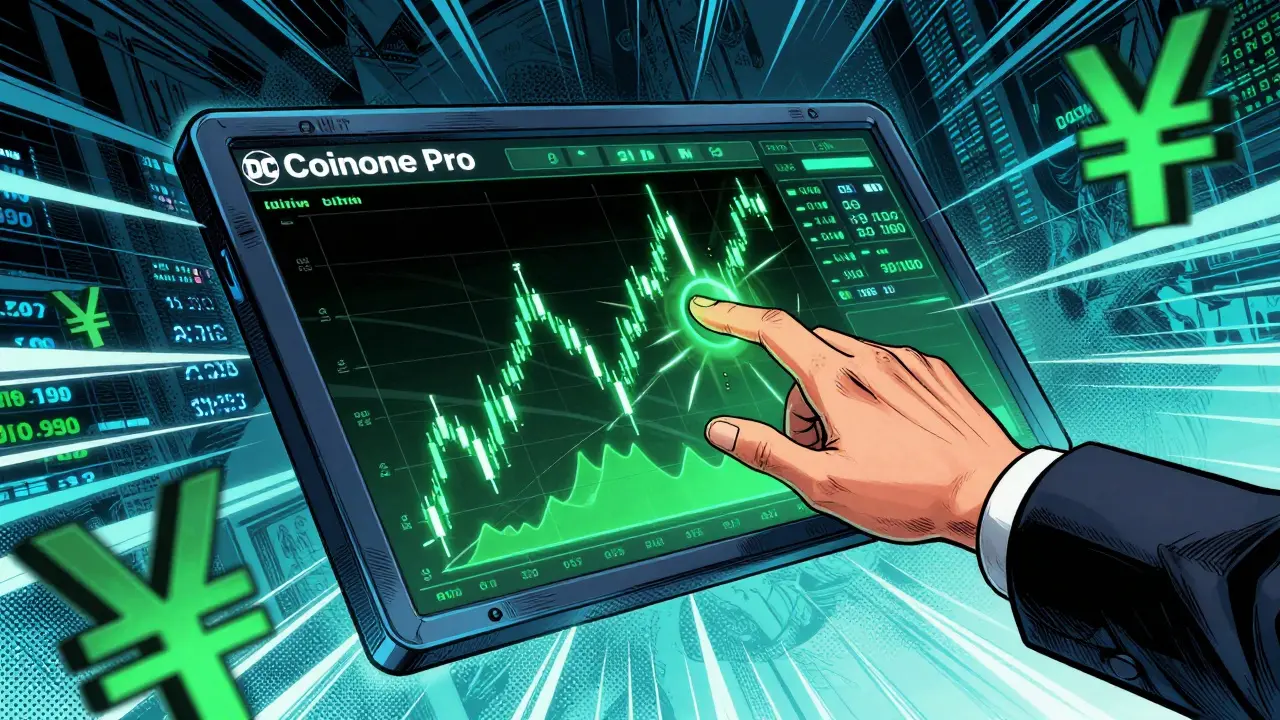
- Coinone Pro: For those who want more control, Coinone Pro offers advanced order books, multi-timeframe candlestick charts, and real-time volume analysis. It feels similar to other professional desktop platforms, allowing you to set limit orders and track price movements closely.
The mobile apps for iOS and Android are also well-maintained. The latest versions (updated late 2024) run smoothly, though some power users note that the session management protocol had minor vulnerabilities patched in October 2024. Always keep your app updated to avoid any security hiccups.
| Feature | Details |
|---|---|
| Supported Cryptocurrencies | 250+ coins including BTC, ETH, XRP |
| Fiat Currency | KRW (South Korean Won) only |
| Trading Pairs | KRW-based pairs (e.g., BTC/KRW) |
| Leverage/Margin | Not available (Spot trading only) |
| Mobile App | iOS and Android available |
Fee Structure: What Will It Cost You?
Fees can eat into your profits faster than you think. Coinone uses a standard maker-taker model, but the rates depend heavily on your trading volume. For most retail traders, the fees are moderate compared to global giants but higher than some domestic competitors.
Here is the breakdown as of early 2026:
- Standard Spot Trading Fee: 0.2% per transaction. This applies to both makers (those who add liquidity) and takers (those who remove it) for average users.
- High-Volume Discounts: If you trade more than 100 million KRW (approx. $75,000 USD) in a month, you qualify for tiered reductions. Makers can see fees drop to 0.0%-0.1%, while takers pay 0.02%-0.1%.
- KRW Withdrawal Fee: A flat rate of 1,000 Won (approx. $0.75 USD) per withdrawal. This is fixed regardless of the amount you withdraw.
- Crypto Deposits: Free. You can deposit Bitcoin, Ethereum, and other supported coins without paying a fee.
Compare this to Upbit, the market leader in Korea, which charges around 0.05% for spot trading. Coinone is more expensive for active day traders. However, for long-term holders who buy once a month, the 0.2% fee is manageable. Just remember that every trade costs you, so avoid unnecessary flipping if you are on the basic tier.
Security and Safety Record
When you put money into an exchange, security is non-negotiable. In this area, Coinone performs exceptionally well. Since its launch in 2014, Coinone has never suffered a major external hack. This is a significant achievement in an industry where breaches are common.
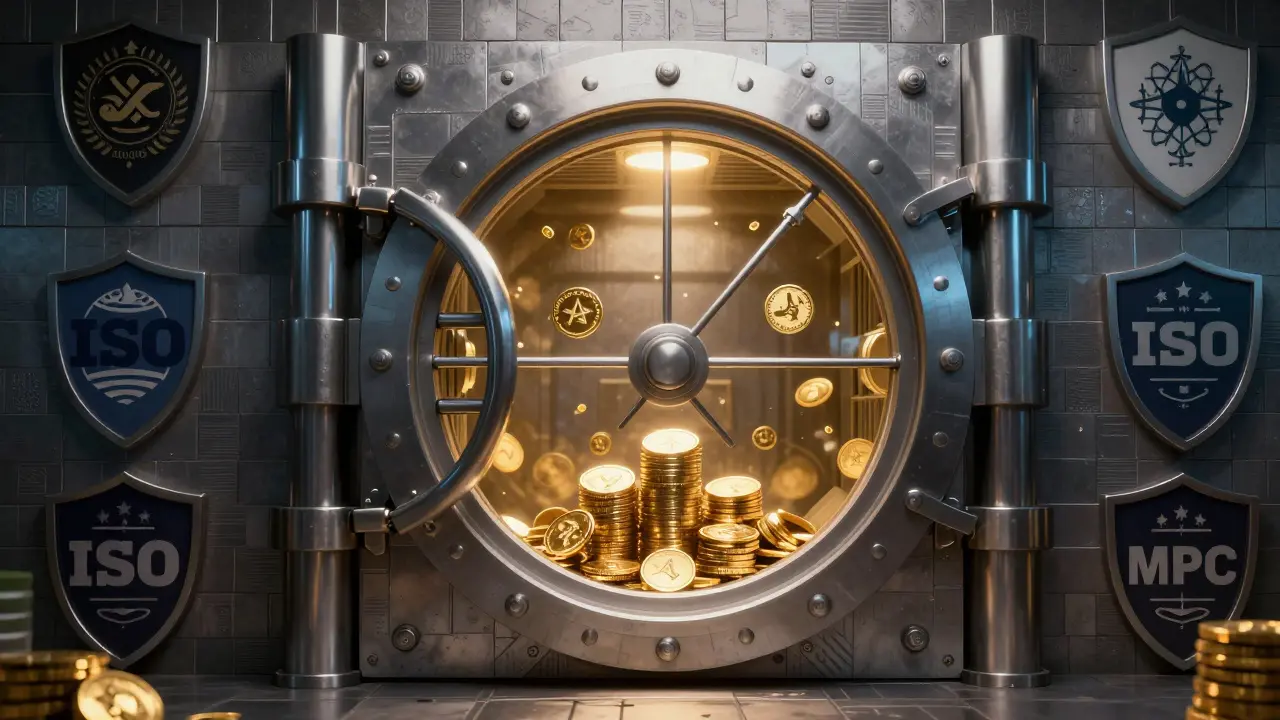
How do they achieve this? They hold ISO/IEC 27001:2013 certification, which is the gold standard for information security management. More importantly, they store 98% of all user assets in cold storage (offline wallets). This means that even if their online servers were compromised, the vast majority of funds would remain untouched.
They also use Hardware Security Modules (HSMs) and conduct regular penetration testing. In Q1 2026, they plan to implement Multi-Party Computation (MPC) wallet technology, which will further enhance security by requiring multiple keys to access funds, reducing the risk of single-point failures.
However, "secure" doesn't mean "risk-free." You are responsible for your own account security. Enable Two-Factor Authentication (2FA) immediately. Use biometric login options on the mobile app. And beware of phishing emails-Coinone will never ask for your password via email.
Coinone Plus: Staking and DeFi Opportunities
Holding crypto is fine, but earning yield on it is better. Recognizing this, Coinone launched 'Coinone Plus,' a dedicated interface for decentralized finance (DeFi) services. This allows you to stake your coins and earn Annual Percentage Rates (APR) without managing complex smart contracts yourself.
As of late 2025, Coinone Plus supports 27 staking assets with a Total Value Locked (TVL) of $85 million. Here are the main options:
- Node Staking: Best for Cosmos (ATOM) holders, offering an APR of around 16.34%. This involves locking your coins for longer periods to support network operations.
- Daily Staking: Flexible option for 15 supported assets with an average APR of 5.2%. You can unstake whenever you want, making it great for cash flow needs.
- Lock-Up Staking: Commit your funds for 90-180 days to earn up to 12% APR. Higher rewards come with less flexibility.
This feature is a major differentiator. Many Korean exchanges offer basic spot trading, but few provide such accessible staking options directly within the app. If you plan to hold assets like ATOM or SOL long-term, Coinone Plus can significantly boost your returns.
User Experience and Customer Support
This is where things get mixed. While the technology is robust, the human side of Coinone receives polarized reviews. On TrustPilot, the platform has a low rating of 2.1/5 stars based on verified reviews. Common complaints include slow response times (averaging 72 hours for email inquiries) and issues with withdrawal restrictions during high volatility.
Conversely, G2.com shows a much higher rating of 4.3/5 stars, with users praising the easy setup and smooth live chat support (average response time of 8 minutes). The discrepancy likely comes down to expectations. Live chat works well for quick questions, but complex issues involving withdrawals or tax documentation often require email support, which is slower.
Also, note that phone support is available only in Korean. If your Korean isn't fluent, you will rely entirely on live chat or email. During periods of extreme market volatility, Coinone has occasionally halted trading temporarily to protect the system. While frustrating, these halts are rare and usually last only a few hours.
Coinone vs. Competitors: How Does It Stack Up?
To decide if Coinone is right for you, you need to compare it to the alternatives. In South Korea, the big three are Coinone, Upbit, and Bithumb.
| Feature | Coinone | Upbit | Bithumb |
|---|---|---|---|
| Market Share | ~15% | ~52% | ~28% |
| Trading Fees (Spot) | 0.2% | 0.05% | 0.05%-0.1% |
| Security Record | No major hacks since 2014 | Minor incidents reported | Major hacks in 2017-2018 |
| Staking Options | Yes (Coinone Plus) | Limited | Limited |
| International Access | Korea Residents Only | Korea Residents Only | Korea Residents Only |
Upbit is the clear winner for low fees and variety, with over 400 coins listed. Bithumb is catching up but has a history of security breaches that still worries some users. Coinone sits in the middle: it offers superior security peace-of-mind and excellent staking features, but at a higher cost for trading. If you prioritize safety and passive income over lowest possible fees, Coinone is a strong choice.
Final Verdict: Is Coinone Worth It in 2026?
Coinone is not the cheapest exchange, nor is it the most international. But for South Korean residents who value security and simplicity, it remains a top-tier option. Its zero-hack record since 2014 is impressive, and the introduction of Coinone Plus adds genuine value for long-term holders.
Use Coinone if:
- You live in South Korea and need seamless KRW banking integration.
- You prioritize security and regulatory compliance above all else.
- You want to earn yield through staking without leaving the exchange.
Avoid Coinone if:
- You are outside South Korea.
- You are a high-frequency day trader sensitive to every basis point of fee difference.
- You need customer support in English via phone.
With the proposed capital gains tax changes in South Korea potentially impacting trading volumes in 2026, exchanges with strong institutional backing like Coinone may actually benefit from increased regulation. For now, it stands as a reliable, secure pillar in the Korean crypto ecosystem.
Can I use Coinone if I am not a resident of South Korea?
No. Coinone strictly requires a South Korean Resident Registration Number or a Foreigner Registration Card for identity verification. It does not accept users from outside South Korea, including those in the US, Europe, or Asia without legal residency in Korea.
Does Coinone offer margin or leverage trading?
As of 2026, Coinone does not offer margin or futures trading. It focuses exclusively on spot trading and staking services. This reduces risk for users but limits strategies for advanced traders who rely on leverage.
How secure is Coinone?
Coinone has a strong security record with no major external hacks since its launch in 2014. It stores 98% of assets in cold storage, holds ISO/IEC 27001:2013 certification, and uses hardware security modules. It is considered one of the safest exchanges in South Korea.
What are the trading fees on Coinone?
The standard spot trading fee is 0.2% for both makers and takers. High-volume traders (over 100 million KRW monthly) can reduce fees to between 0.0% and 0.1%. KRW withdrawals cost a flat 1,000 Won per transaction, while crypto deposits are free.
Is Coinone regulated?
Yes. Coinone is fully compliant with South Korean regulations, including oversight by the Financial Services Commission (FSC) and the Korea Financial Intelligence Unit (KoFIU). It obtained ISMS certification in 2021, meeting strict national security standards.
Diana Morris
May 30, 2026 AT 13:20listen up if you are not in korea this is trash for you stop wasting time
Dianne Wright
May 30, 2026 AT 19:37i honestly feel like people who trust these platforms are just asking to get burned because the whole system is rigged against retail traders and nobody talks about how the insiders dump on us while we hold the bag waiting for a pump that never comes
you think your money is safe in cold storage but have you ever seen what happens when an exchange goes bankrupt or gets frozen by regulators it is always the little guy who loses out and i am so tired of hearing people praise security records as if that means anything when the real risk is legal seizure or insider manipulation
also why does everyone ignore the fact that 0.2% fees are absolute robbery compared to decentralized options where you can trade peer to peer without giving your identity to some corporation that might disappear overnight
i remember back in 2018 when bithumb got hacked and people lost millions and now they are trying to act like coinone is different but history repeats itself every single time with crypto exchanges promising safety while hiding massive vulnerabilities behind fancy certifications
and dont even get me started on the staking yields which are often inflated by token emissions that dilute value over time so you are earning yield on paper but losing purchasing power in reality
it is just so exhausting watching people fall for the same marketing tricks again and again without doing their own due diligence on the actual code and governance structure of these projects
we need to wake up and realize that centralized exchanges are the enemy of true decentralization and every dollar we put into them strengthens the very system that wants to control our financial freedom
so please save yourself the headache and look into self custody solutions instead of relying on third parties who have no incentive to protect your assets beyond what is legally required
the truth is harsh but necessary if you want to survive in this space long term you have to be paranoid and skeptical of everything including these so called secure platforms
i just wish more people would understand that convenience is the price we pay for surrendering control and most people are not willing to learn the hard skills needed to manage their own keys properly
it is a sad state of affairs really because we had the potential for a revolution but instead we ended up with another layer of financial intermediaries charging us fees for the privilege of holding our digital property
anyway rant over but i hope someone here reads this and thinks twice before depositing their life savings into yet another centralized silo that could vanish tomorrow
just my two cents from someone who has been burned too many times to care about comfort anymore
stay woke folks
trisya hazriyana
May 31, 2026 AT 13:41oh great another review praising mediocrity as excellence because apparently zero hacks since 2014 is a high bar to clear in 2026
let us be real here the ui looks like it was designed by a committee of accountants who hate fun and the fee structure is predatory for anyone who actually trades regularly
but sure lets pretend that storing coins in cold storage makes you a hero when half the industry is moving towards non custodial solutions anyway
philosophically speaking this platform represents the old guard clinging to relevance while the future moves on without them
sarcastic clap for the innovation team
Crystal Davis
June 1, 2026 AT 03:00the data presented here is superficial at best and ignores critical metrics like liquidity depth during volatile market conditions which is where coinone truly fails compared to upbit
analyzing the order book snapshots reveals significant slippage on larger orders which effectively increases the cost basis beyond the stated 0.2% fee
furthermore the lack of advanced charting tools limits technical analysis capabilities making it unsuitable for serious traders who rely on precise entry and exit points
the staking yields mentioned are also misleading as they do not account for impermanent loss risks associated with providing liquidity to certain pools
a comprehensive risk assessment would require a deeper dive into the smart contract audits and the economic incentives of the underlying protocols which this review conveniently omits
in conclusion while coinone may suffice for casual investors it falls short for professional participants who demand institutional grade infrastructure and transparency
do not let the marketing gloss over these fundamental deficiencies
Christina Pearce
June 1, 2026 AT 05:45i appreciate the detailed breakdown especially regarding the verification process for foreign residents since that has been a pain point for many expats i know
it is good to know that live chat support is relatively quick which can be a lifesaver when dealing with urgent account issues
does anyone have experience with the tax reporting features provided by coinone or do users still need to manually compile their transaction histories for the annual filings
i am curious if the platform offers any api access for automated trading strategies since that would be a huge plus for active traders
Barclay Chantel
June 2, 2026 AT 14:06how quaint that one must reside in south korea to participate in this digital casino
the pretension of claiming superior security while charging exorbitant fees is laughable to those of us who understand the nuances of blockchain technology
one would think that after a decade in business they could offer something more sophisticated than a basic spot trading interface
it is almost insulting to suggest that this platform is competitive with global leaders when the feature set is so rudimentary
perhaps if they spent less time on regulatory compliance theater and more time on product development they might earn some respect
until then they remain a niche curiosity for those unable or unwilling to engage with the broader crypto ecosystem
truly a testament to the limitations of a closed market approach
Miss Masquer
June 2, 2026 AT 19:12i find it fascinating how the cultural context of south korea shapes the entire user experience on coinone particularly in terms of how identity verification is handled with such strict adherence to local residency requirements which reflects a broader societal emphasis on trust and accountability within financial systems
this approach contrasts sharply with the more laissez-faire attitude prevalent in western markets where anonymity is often prized over transparency leading to a completely different set of risks and rewards for participants
when considering the long term viability of such platforms it is essential to examine not only the technical aspects like security protocols and fee structures but also the social dynamics that influence user behavior and adoption rates within specific geographic regions
for instance the high percentage of adults owning crypto in south korea suggests a deep level of engagement and understanding among the population which likely contributes to the stability and resilience of exchanges like coinone despite occasional controversies
additionally the integration of traditional banking methods with cryptocurrency transactions creates a hybrid model that bridges the gap between legacy finance and emerging technologies offering a unique pathway for mainstream acceptance
while some may criticize the limitations imposed on international users it is important to recognize that these restrictions are often driven by regulatory frameworks designed to protect consumers and maintain financial integrity within the country
ultimately the success of coinone serves as a case study in how localized solutions can thrive in highly regulated environments providing valuable lessons for other jurisdictions looking to develop their own crypto ecosystems
it would be interesting to see how this model evolves as global standards begin to converge and whether cross border interoperability becomes a priority for regional players
Joshua Alcover
June 3, 2026 AT 14:05the notion that a sovereign nation should restrict access to its financial infrastructure based on residency is fundamentally sound and aligns with principles of national security and economic sovereignty
coinone exemplifies this by enforcing strict identity verification protocols which ensure that only legitimate residents can utilize the platform thereby mitigating risks associated with illicit activities and capital flight
from a macroeconomic perspective this controlled environment allows for greater oversight and regulation which is crucial for maintaining stability in the face of volatile asset classes like cryptocurrency
those who argue for open access fail to understand the complexities involved in managing cross border transactions and the potential threats posed by unregulated entities operating outside jurisdictional boundaries
therefore it is imperative that we support platforms like coinone that prioritize domestic interests and adhere to rigorous compliance standards rather than succumbing to the allure of unrestricted global markets
this stance not only protects individual investors but also safeguards the broader financial system from external shocks and manipulative practices
in essence coinone represents a bastion of order and responsibility in an otherwise chaotic landscape demonstrating the value of disciplined governance in the digital age
Debbie Lewis
June 5, 2026 AT 01:33seems pretty straightforward if you are in korea it works fine if you are not it does not matter much either way
the fees are what they are and the security record is decent enough for most people
no need to overcomplicate things
Eric Grosso
June 5, 2026 AT 16:14hey guys i noticed that the app sometimes crashes when i try to withdraw large amounts of btc is this a known issue or am i doing something wrong
also the charts lag a bit on my phone which makes timing trades difficult any tips for fixing this would be appreciated
thx
Edith Mair
June 5, 2026 AT 20:27i am concerned about the limited language support for customer service since english speakers might struggle to resolve complex issues efficiently
has anyone successfully navigated a dispute with coinone using only live chat or email without speaking korean
it seems risky to rely on a platform that cannot communicate clearly with all its users especially during critical moments like withdrawal delays
Sam Dashti
June 6, 2026 AT 00:26well butter my biscuit and call me surprised that coinone is still standing tall after all these years like a stubborn mule in a hurricane
the whole vibe is kinda cozy if you ignore the fact that you cant take your toys home unless you live in seoul which is a bit of a bummer for us wanderlust souls
but hey if you are stuck in korea and want to park your coins somewhere safe-ish then maybe give it a whirl just dont expect any fireworks
the staking part sounds like a nice little bonus treat if you are patient enough to wait for the cake to rise
so there you have it folks a mixed bag of delights and disappointments wrapped up in a korean bow
Joe Clements
June 6, 2026 AT 11:42thanks for sharing this review it helps clarify some of the confusion around which exchange to use depending on where you live
i was worried about the security aspect but knowing they have iso certification gives me some peace of mind
hope everyone stays safe out there in the crypto world
Rosie Morris
June 8, 2026 AT 00:25i feel u on the fees being high but i guess thats the price we pay for convenience right
my friend had trouble verifying her id too so i can imagine it is stressful for foreigners
glad to hear the app is stable though bc nothing is worse than tech glitches when money is involved
hope u all make lots of profit !!
lorna erni
June 8, 2026 AT 16:15come on people lets rally behind coinone because they are doing their best to keep things secure and compliant in a tough regulatory environment
instead of complaining about the fees we should appreciate the stability they provide which is invaluable in this volatile market
if you are in korea join the community and support local businesses that prioritize your safety and well being
together we can build a stronger crypto ecosystem that benefits everyone not just the big players
lets spread the word and encourage others to try coinone for their trading needs
unity is strength friends so let us stand together and show the world what korean crypto culture is all about
go coinone go !!!