
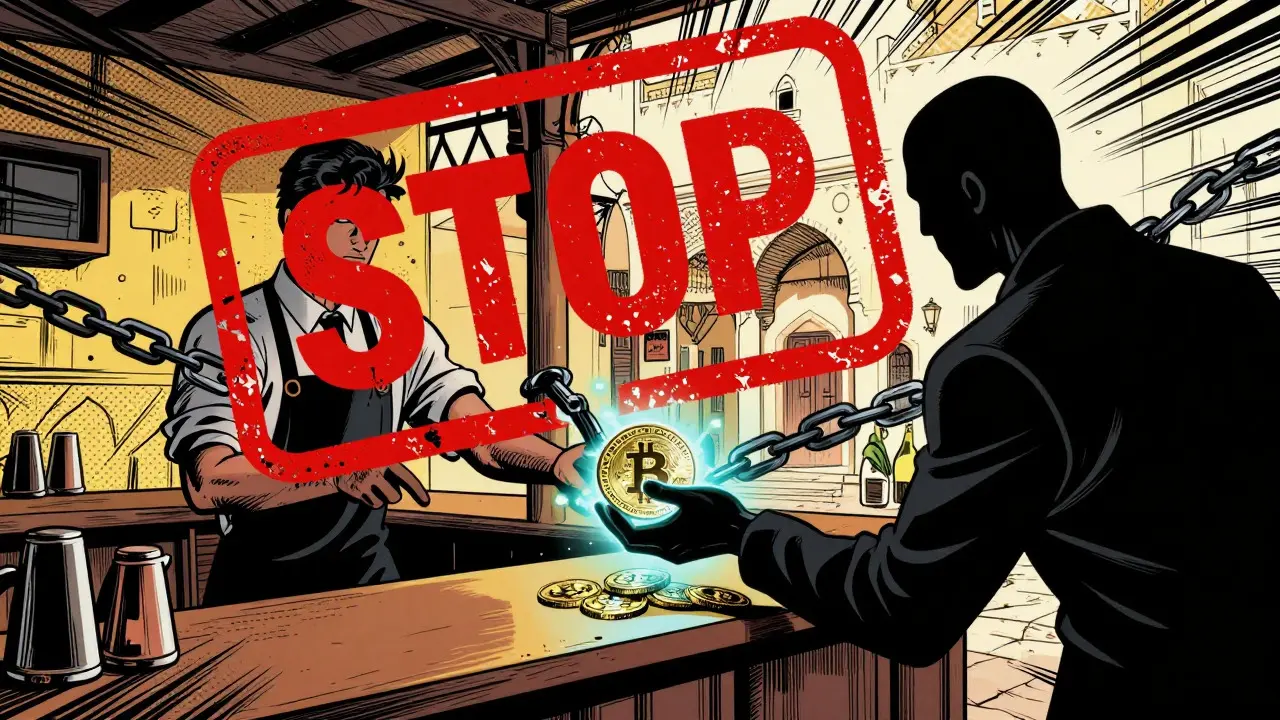
Imagine trying to buy a coffee with Bitcoin in Tunis. You can’t. In fact, you might end up in jail. While most of the world is debating how to regulate cryptocurrencies, Tunisia has taken a harder line, maintaining one of the strictest bans on digital assets globally since 2018.
If you are an investor, a developer, or just someone curious about the financial landscape in North Africa, understanding the Central Bank of Tunisia crypto policy is crucial. It is not just a simple "no." It is a complex mix of total prohibition for the public, severe penalties for violators, and a quiet, controlled experiment with blockchain technology behind closed doors.
The 2018 Directive: A Hard Line on Digital Assets
To understand where things stand today, we have to look back at May 2018. Before this date, the regulatory environment was ambiguous. From 2013 to 2017, people traded Bitcoin mostly through peer-to-peer chat rooms without formal oversight. It was a gray area, but it existed.
Then, the Central Bank of Tunisia (BCT) issued a definitive directive. This rule prohibited any transactions involving virtual money without explicit state authorization. Essentially, the BCT declared that all cryptocurrency activities were illegal unless they happened within a government-approved framework-which, for the general public, meant nowhere.
This move placed Tunisia in a small club of countries with total bans, alongside nations like China, Qatar, Egypt, Algeria, Morocco, Nepal, and Bangladesh. The motivation wasn’t just ideological; it was economic. The government was deeply concerned about capital flight. They feared that if citizens could easily convert their Tunisian dinar into stablecoins or Bitcoin, foreign currency reserves would drain away, destabilizing the national economy.
What Is Actually Illegal? Breaking Down the Restrictions
The ban is comprehensive. It is not just about holding coins in a wallet. Here is what the current framework restricts:
- Payments: Merchants cannot accept digital assets for goods or services. If a local shop tries to take Ethereum for a pair of shoes, they are violating the law.
- Mining: Importing ASIC rigs is heavily restricted. Customs authorities have the power to seize equipment at borders. Furthermore, exchanging mined coins for Tunisian dinars is a direct violation of the 2018 directive.
- Trading and Exchanges: Operating a crypto exchange in Tunisia is illegal. Public trading platforms face severe crackdowns.
- Marketing: Even marketing tokens or promoting crypto projects can lead to legal trouble.
The penalties are no joke. Violations can carry up to five years in prison and substantial fines under currency-control regulations. Financial institutions are strictly prohibited from facilitating these transactions, meaning your local bank will likely block any card purchases made at foreign cryptocurrency exchanges.
The Paradox: The Regulatory Sandbox Experiment
Here is where the story gets interesting. If the ban is so total, why do tech startups still talk about blockchain in Tunisia?
Since 2020, the BCT has operated a regulatory sandbox. This program allows a small, select group of fintech companies to test blockchain-based solutions under tight supervision. These cohorts last six to twelve months and operate with strict limits on users and transaction volumes.
Local startups like VFunder (creative crowdfunding), Hydro E-Blocks (carbon tracking), and No Phobos (AI-generated NFTs) have participated. However, there is a catch. Most of these companies host their infrastructure offshore. They use the sandbox exemption primarily for research and development purposes rather than for live, public-facing commercial operations within Tunisia.
This dual approach reveals a nuanced strategy. The government wants the benefits of blockchain technology-transparency, efficiency, traceability-but only if it remains under their control. They want permissioned ledgers, not decentralized freedom.
| Activity | Status | Key Restriction |
|---|---|---|
| Retail Trading | Illegal | No official exchanges; P2P carries risk |
| Crypto Mining | Banned | Equipment seizure at customs; conversion to Dinar forbidden |
| Merchant Payments | Prohibited | Merchants must use fiat currency (Dinar) |
| Blockchain R&D | Restricted Access | Allowed only via BCT Regulatory Sandbox |
| CBDC (E-Dinar) | Abandoned | Proof-of-concept explored in 2019 but ruled out |

Institutional Framework: Who Enforces the Rules?
The enforcement of this policy is not handled by a single entity. It involves a multi-institutional approach designed to cover all bases.
The Central Bank of Tunisia is the primary regulator. However, they work closely with the Ministry of ICT & Digital Economy and the Financial Market Council (CMF). The CMF would theoretically regulate tokenized securities if the ban were ever lifted, showing that the legal infrastructure for potential future changes is already being mapped out.
Customs authorities play a critical role in physical enforcement, specifically targeting mining hardware. Meanwhile, banks act as the first line of defense by blocking transactions to known crypto entities. This coordinated effort makes it difficult for individuals to navigate around the restrictions legally.
Historical Context and Recent Shifts
Tunisia’s stance hasn’t always been this rigid. The period between 2013 and 2017 was characterized by ambiguity. The 2018 ban was a reaction to specific fears about money laundering and capital flight. Interestingly, in 2019, the BCT briefly explored an E-Dinar Central Bank Digital Currency (CBDC). This proof-of-concept signaled that the institution understood the value of digital money-they just wanted to issue it themselves, not let private entities like Bitcoin compete.
A pivotal moment occurred in 2021 when a teenager was imprisoned for exchanging a small amount of cryptocurrency. This case sparked high-level cabinet discussions about decriminalization. It highlighted the harsh reality of the enforcement mechanism. While these discussions suggested potential flexibility, no policy changes have materialized since then.
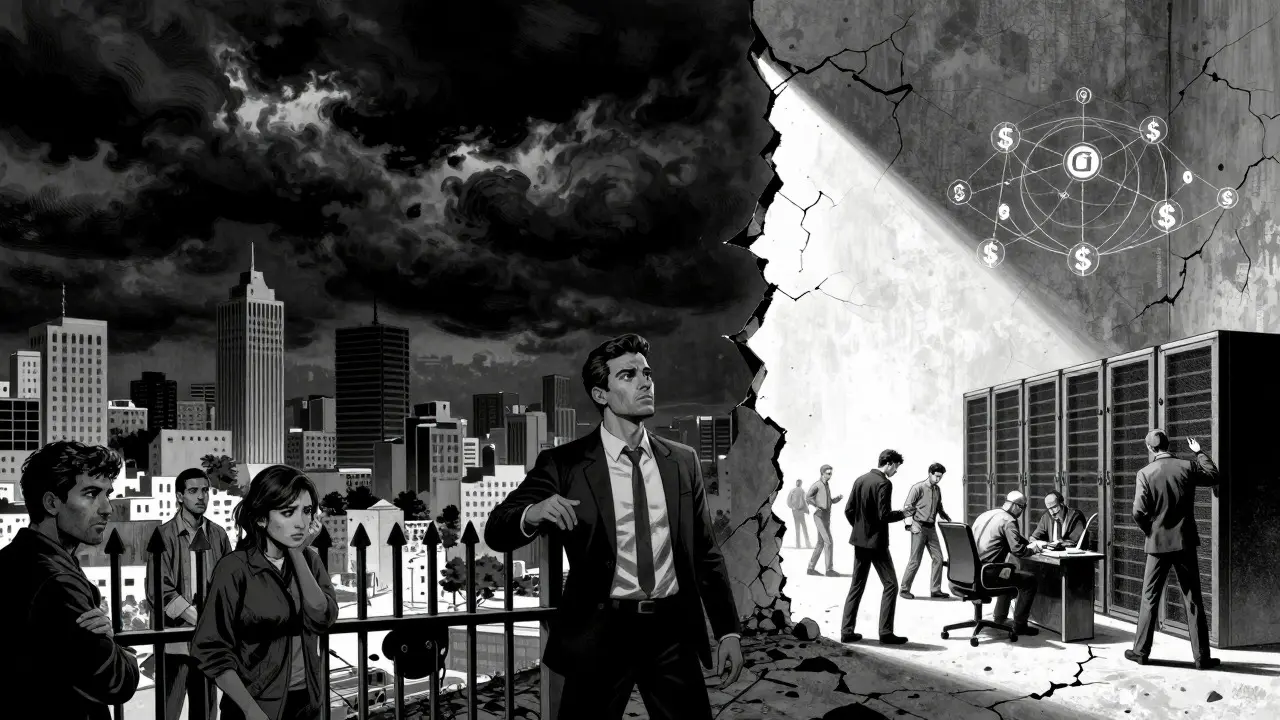
As of mid-2026, the enforcement remains strict. However, the continued operation of the regulatory sandbox suggests that the door isn’t completely welded shut. It is more like a narrow crack, allowing light in for approved players while keeping the masses out.
Economic Pressures and Future Outlook
Why does this matter now? Tunisia faces significant economic challenges in 2025 and 2026. Issues with domestic borrowing and debates over central bank independence add pressure to the monetary policy framework. The government relies on controlling foreign currency reserves to maintain stability.
Digital assets pose a threat to this control. If the ban loosens, capital could flow out faster than regulators can track. Conversely, if the ban stays too tight, it stifles innovation and drives talent abroad. We see this tension in the Digital Tunisia 2025 project, which explicitly lists blockchain as a tool for supply chain transparency but exclusively on permissioned ledgers.
International engagement also plays a role. Tunisia participates in the Financial Stability Board (FSB) Middle East and North Africa Regional Consultative Group. Here, they discuss cross-border payments and crypto-asset recommendations alongside peers from Saudi Arabia and Egypt. This exposure to global standards may gradually influence domestic policy, pushing toward a more integrated, albeit controlled, approach.
Practical Advice for Investors and Developers
If you are looking to engage with the Tunisian market, here is what you need to know:
- Stay Offshore: If you are a startup, consider hosting your infrastructure outside Tunisia. Use the local presence for talent acquisition, but keep the technical backbone compliant with international jurisdictions.
- Apply for the Sandbox: If your project involves legitimate fintech innovation (like remittances or traceability), apply for the BCT sandbox. Be prepared for strict oversight and limited scale.
- Avoid Physical Hardware Imports: Do not try to bring mining rigs into the country. The risk of seizure is extremely high.
- Monitor Legal Precedents: Keep an eye on court cases related to crypto violations. Changes in judicial interpretation often precede legislative changes.
The landscape is shifting slowly. The total ban is unlikely to disappear overnight, but the definition of "illegal" may evolve as the sandbox programs prove their worth. For now, caution is the best policy.
Is Bitcoin legal in Tunisia in 2026?
No, Bitcoin is effectively illegal for general public use. The Central Bank of Tunisia banned all cryptocurrency transactions in 2018. While holding coins in a personal wallet is hard to enforce, trading, mining, and using them for payments are prohibited and can result in fines or imprisonment.
Can I mine cryptocurrency in Tunisia?
Mining is severely restricted. Importing ASIC mining rigs is difficult due to customs seizures, and converting mined coins into Tunisian dinars is illegal. Most miners operate offshore or hide their activities, risking significant legal penalties.
What is the purpose of the BCT regulatory sandbox?
The regulatory sandbox allows selected fintech startups to test blockchain technologies under strict supervision. It enables innovation in areas like remittances and supply chain tracking without allowing open-market cryptocurrency adoption, balancing technological progress with monetary control.
Will Tunisia lift its crypto ban soon?
There are no official plans to lift the total ban. However, the continued expansion of the regulatory sandbox and participation in international financial forums suggest a gradual shift toward controlled integration rather than immediate deregulation.
What are the penalties for crypto violations in Tunisia?
Violations can lead to up to five years in prison and substantial fines. Penalties are enforced under currency-control regulations and target activities such as operating exchanges, marketing tokens, and illegal conversions of digital assets to fiat currency.
Does Tunisia have a Central Bank Digital Currency (CBDC)?
No. The Central Bank of Tunisia explored an E-Dinar CBDC proof-of-concept in 2019, but the initiative was quickly ruled out. Currently, there is no active CBDC in circulation.
How does Tunisia's policy compare to other Arab countries?
Tunisia shares a restrictive stance with countries like Egypt, Algeria, and Morocco, which also ban or heavily restrict cryptocurrencies. This contrasts with nations like UAE and Bahrain, which have established progressive regulatory frameworks for digital assets.