
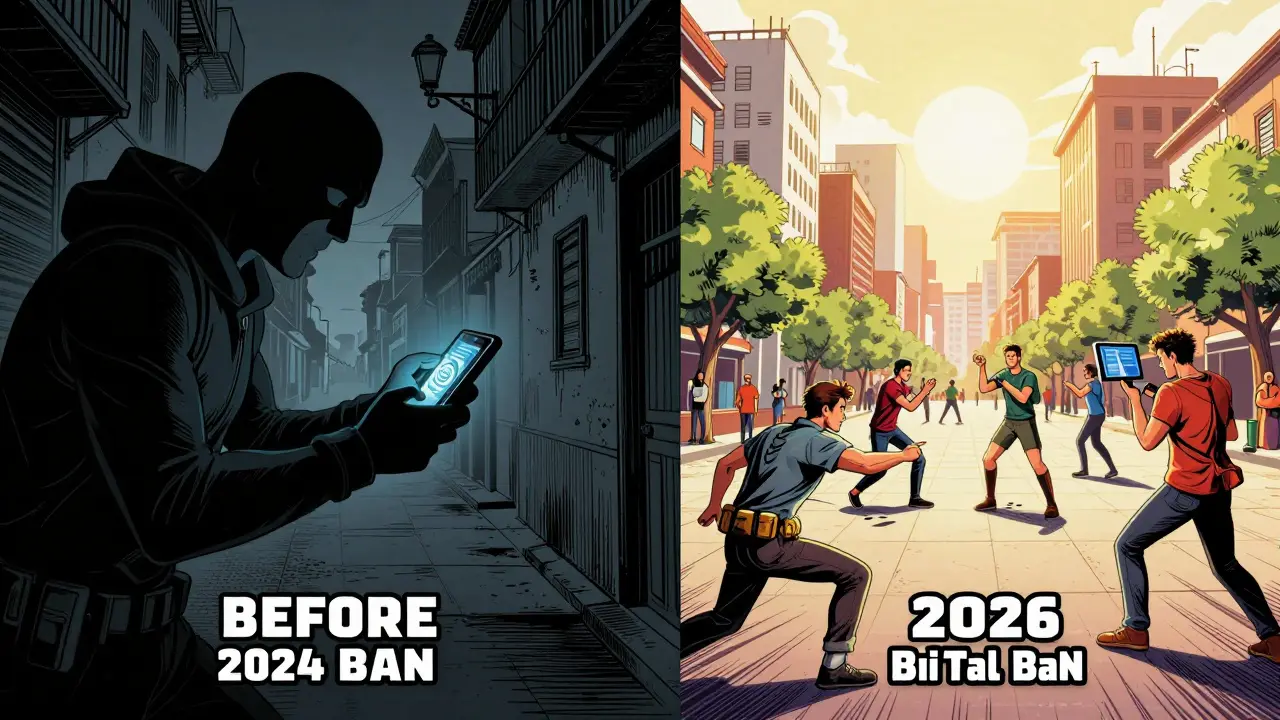
For over a decade, the question of how Bolivians accessed cryptocurrency was a story of shadows and workarounds. You couldn't buy Bitcoin at a local kiosk. Banks wouldn't touch it. The Central Bank had explicitly banned it. But if you are asking this question today in 2026, the premise has changed completely. Bolivia didn't just loosen the screws; it tore out the old rules and built a new house.
The short answer? They don't need to sneak around anymore. Since June 2024, owning, trading, and using cryptocurrency in Bolivia is not only legal-it's actively supported by the government. The 'ban' is history. What exists now is a regulated, growing ecosystem where citizens can walk into licensed exchanges or use peer-to-peer platforms with the same confidence they might use a traditional bank account for foreign currency.
The Shift from Prohibition to Policy
To understand why the landscape looks so different now, you have to look at what broke the ice. For ten years, starting in May 2014, the Central Bank of Bolivia (BCB) maintained a strict prohibition on all virtual asset activities. Resolution N° 144/2020 reinforced this stance, effectively cutting off formal banking channels for anyone involved in crypto. It was one of the most restrictive environments in South America.
Then came the dollar crisis. When a country faces severe liquidity issues and its local currency loses purchasing power, ideological bans often give way to economic necessity. In 2024, the Bolivian government realized that blocking digital assets wasn't protecting the economy; it was stifling potential growth and remittance flows. On June 26, 2024, the government issued Resolution No. 82/2024. This single document lifted the decade-long ban and signaled a pivot toward embracing digital assets as tools for financial inclusion and stability.
This wasn't a quiet policy tweak. It was a dramatic reversal. Within twelve months of lifting the ban, crypto usage in Bolivia skyrocketed by more than 500%. That kind of adoption curve doesn't happen when people are still hiding their wallets. It happens when the path becomes clear.
How Bolivians Access Exchanges Today
If you are in La Paz or Santa Cruz right now, accessing a crypto exchange is straightforward. The process mirrors what users experience in other regulated markets like Argentina or Chile, but with specific local nuances.
- Licensed Virtual Asset Service Providers (VASPs): Following the regulatory groundwork laid in April 2025 via Resolution no. 019/2025, businesses can now apply for licenses to operate as VASPs. These entities act as intermediaries, allowing users to buy, sell, and store cryptocurrencies legally. Unlike the grey-market days, these providers are subject to oversight, meaning your funds have a layer of institutional protection.
- Peer-to-Peer (P2P) Platforms: Global P2P platforms remain popular because they offer flexibility. However, since the ban was lifted, many local traders on these platforms are now operating within the bounds of the new Supreme Decree No. 5384 (enacted in May 2025). This decree established licensing obligations, so reputable sellers often display compliance badges or verified status, reducing the risk of scams that plagued the unregulated era.
- Stablecoin Integration: Perhaps the most significant change is the role of USD-pegged stablecoins. The Central Bank of Bolivia began utilizing these instruments in March 2025 for cross-border payments and remittances. For the average citizen, this means you can hold value in a digital dollar equivalent without leaving the local financial ecosystem. Many exchanges now prioritize USDT or USDC pairs because they offer stability against the volatile Boliviano.
You no longer need to rely on underground networks or risky third-party escrow services. The infrastructure is public, licensed, and monitored.

The Regulatory Framework: Safety Over Speed
Legalization doesn't mean the Wild West. The Bolivian government has been careful to build guardrails. The transition from 'banned' to 'legal' happened quickly, but the framework solidified throughout 2025.
Supreme Decree No. 5384 is the cornerstone of this new era. It introduced mandatory licensing for market participants. Why does this matter to you? Because it separates professional operators from hobbyists running scams. If an exchange operates in Bolivia today, it should be registered under this decree. This allows the authorities to track illicit flows while enabling legitimate commerce.
The Central Bank hasn't just sat back. They launched public awareness campaigns to educate citizens about the risks of digital assets. This is crucial. In countries where financial literacy regarding blockchain is low, sudden legalization can lead to consumer exploitation. By treating education as part of the regulatory strategy, the BCB aims to prevent the boom-and-bust cycles seen in less prepared markets.
| Feature | Pre-2024 (Ban Era) | 2026 (Regulated Era) |
|---|---|---|
| Legal Status | Prohibited by Central Bank | Legal and Regulated |
| Banking Interaction | Banks blocked crypto transactions | Licensed VASPs can interface with banks |
| Risk Level | High (scams, confiscation) | Moderate (market risk, but legal recourse exists) |
| Primary Use Case | Circumvention of capital controls | Remittances, savings, trade settlement |
| Government Stance | Hostile | Supportive (via MoU with El Salvador) |
International Cooperation: Learning from El Salvador
Bolivia didn't reinvent the wheel. Knowing that navigating crypto regulation is complex, the Central Bank signed a Memorandum of Understanding (MoU) with El Salvador's National Commission for Digital Assets (CNAD). El Salvador, which adopted Bitcoin as legal tender, became a natural partner for technical guidance.
This agreement, signed by BCB Acting President Edwin Rojas Ulo and CNAD's Juan Carlos Reyes García, covers critical areas like blockchain intelligence tools, data analytics, and risk analysis. For the user, this means the Bolivian regulatory body is leveraging proven models rather than guessing. It also implies that future regulations will likely align with international standards, making it easier for global exchanges to enter the Bolivian market.
This cooperation isn't just about policing; it's about building capacity. Joint staff training ensures that Bolivian regulators understand the technology they are overseeing. When regulators understand the tech, they tend to regulate it smarter, not harder.

Nuances and Remaining Caution
While the door is open, it isn't wide open for every scenario. The government maintains a pragmatic, cautious approach in specific sectors. For instance, in May 2025, the state oil company YPFB attempted to use cryptocurrency for fuel imports. The government initially blocked this move. This highlights a key distinction: while individuals and private businesses can freely engage with crypto, state-owned enterprises face stricter scrutiny.
This isn't a contradiction; it's risk management. The state wants to encourage innovation in the private sector to boost the economy, but it doesn't want to expose sovereign assets to the volatility of unproven payment methods yet. As a regular user, this doesn't affect your ability to trade. But it signals that the government views crypto as a tool for efficiency and inclusion, not necessarily as a replacement for the national currency in official treasury operations-at least not yet.
Why This Matters for Investors and Users
The shift in Bolivia offers a case study in how economic pressure can drive regulatory evolution. For investors looking at emerging markets, Bolivia represents a high-growth opportunity. The 500% surge in usage indicates pent-up demand. People who were previously excluded from the global financial system due to lack of dollars or banking access now have a digital on-ramp.
For everyday users, the benefit is simplicity. You can receive remittances from abroad in stablecoins, convert them to Bolivianos locally through a licensed provider, and keep your savings protected from inflation. The friction that once made crypto a niche, risky activity has been replaced by a structured market.
The era of wondering 'how do I get around the ban' is over. The new question is 'which licensed provider offers the best rates?' And that is a much healthier conversation to be having.
Is cryptocurrency still banned in Bolivia in 2026?
No, cryptocurrency is no longer banned in Bolivia. The ban was officially lifted on June 26, 2024, via Resolution No. 82/2024. Since then, the government has implemented a comprehensive regulatory framework that allows citizens to legally own, trade, and use digital assets.
Can I use my local bank to buy crypto in Bolivia?
You cannot directly buy crypto through traditional retail banking interfaces in the same way you might in some Western countries, but licensed Virtual Asset Service Providers (VASPs) can now interact with the banking system. You typically deposit fiat currency into a licensed exchange or VASP, which then facilitates the purchase of cryptocurrency. The Central Bank has enabled these connections as part of the new regulatory structure.
What is the role of the Central Bank of Bolivia in crypto?
The Central Bank of Bolivia (BCB) has shifted from a prohibitive stance to a supportive and regulatory one. They oversee the licensing of Virtual Asset Service Providers, conduct public education campaigns, and utilize USD-pegged stablecoins for cross-border payments and remittances to stabilize the economy.
Are there any restrictions on state companies using crypto?
Yes, there are cautions regarding state-owned enterprises. For example, the government initially blocked the state oil company YPFB from using crypto for fuel imports in 2025. While private citizens and businesses can freely use crypto, state entities face stricter scrutiny to protect sovereign assets from market volatility.
How did Bolivia's crypto regulations change in 2025?
In 2025, Bolivia solidified its post-ban framework. Key developments included Resolution no. 019/2025, which recognized virtual assets and service providers, and Supreme Decree No. 5384, which established licensing obligations for market participants. Additionally, the Central Bank signed an MoU with El Salvador to share regulatory expertise.
stalin brian
June 1, 2026 AT 09:44wait so they actually lifted the ban? i thought bolivia was like the last holdout in south america against crypto. this is huge news for everyone trying to send money home without losing half to fees. really glad they finally caught up with reality instead of just banning things because they dont understand them.
Dana Rapoport
June 2, 2026 AT 10:20It is fascinating to observe how economic necessity often forces ideological hands. The shift from prohibition to regulation in Bolivia serves as a powerful reminder that financial inclusion cannot be legislated away by fiat alone. When citizens are excluded from traditional banking due to liquidity crises, they will find alternative avenues regardless of legal standing. The formalization of these avenues through Resolution No. 82/2024 represents a maturation of policy rather than a capitulation to trends.
Hadleigh Edwards
June 3, 2026 AT 14:16I have been following the developments in Latin American cryptocurrency markets for quite some time now and I must say that the trajectory taken by Bolivia is truly remarkable when you consider the historical context of their strict prohibitions which lasted for over a decade and it is incredibly encouraging to see that the government has recognized the potential benefits of digital assets for financial inclusion and stability especially given the severe liquidity issues that plagued the economy recently and the fact that they have implemented a comprehensive regulatory framework including the licensing of Virtual Asset Service Providers and the establishment of peer-to-peer platforms under Supreme Decree No. 5384 demonstrates a sophisticated understanding of how to balance innovation with consumer protection and risk management which is something that many other countries are still struggling to achieve effectively.
Christina Pearce
June 5, 2026 AT 05:43This is such a positive step forward. It’s great to see governments prioritizing safety and education alongside legalization. The collaboration with El Salvador seems like a smart move to avoid common pitfalls. Curious if there are any specific resources for Bolivians looking to learn more about secure wallet usage?
Diana Morris
June 6, 2026 AT 10:32finally some sense. took them long enough but better late than never. the dollar crisis forced their hand obviously. now lets see if they can keep up with the tech or if its just another bureaucratic mess waiting to happen
Dianne Wright
June 6, 2026 AT 22:11oh please dont get too excited. its always the same story. they lift the ban then they introduce regulations so heavy that only the biggest players survive while the little guy gets crushed by compliance costs. remember how argentina tried similar things? yeah exactly. this is just another way for the state to tax your transactions under the guise of 'protection'. typical.
trisya hazriyana
June 8, 2026 AT 21:55look at the jargon here VASPs P2P stablecoins. sure why not. let us all pretend that slapping a license on a scammer makes them legitimate. the market decides not the bureaucrats. if the rates are bad people will go off chain anyway. typical top down approach failing to grasp decentralized ethos
Debbie Lewis
June 9, 2026 AT 09:25Just watching this unfold. Seems like a logical progression given the economic pressures. Hope it works out for the everyday person.
Eric Grosso
June 9, 2026 AT 16:43i mean its good news right? but im worried about the banks. if they are still hesitant how do we actually move money in and out easily? does anyone know if local bolivian banks are cooperating with these new VASPs yet or is it still kinda sketchy?
Edith Mair
June 10, 2026 AT 02:41The distinction between private sector freedom and state-owned enterprise caution is critical. YPFB being blocked from using crypto for fuel imports shows the government understands volatility risks for sovereign assets. This isn't hypocrisy; it's prudent fiscal management. Citizens need access, but the state needs stability.
Sam Dashti
June 11, 2026 AT 16:11What a vibrant turn of events! It feels like the dam has finally burst after years of pressure. The colorful tapestry of financial innovation is weaving itself into the fabric of Bolivian life. One wonders if the old guard is scratching their heads in confusion or perhaps secretly relieved to have a scapegoat for past failures. The energy in La Paz must be electric!
Joe Clements
June 11, 2026 AT 22:15I'm really happy to hear this. It must have been so stressful for families relying on remittances to deal with all those restrictions. Knowing there's now a legal, safer path for their loved ones back home brings a lot of peace of mind. Great job to the policymakers who pushed for this change.
Rosie Morris
June 12, 2026 AT 14:35so true what bill said earlier about the education part. my cousin lives in santa cruz and he says everyone is confused still. lots of scams popping up even though its legal now. people just want to make quick money and forget about security. its scary how fast things change
lorna erni
June 13, 2026 AT 06:47Let's not kid ourselves, this is purely about control. They didn't lift the ban to help the people; they lifted it to track every single transaction. You think they care about financial inclusion? No, they care about data. But hey, at least you can buy your Bitcoin legally now while they watch you sleep. Progress!
saradee dee
June 14, 2026 AT 09:34Oh my goodness this is amazing news! I have family in Bolivia and they were always so worried about sending money home. Now they can use stablecoins? That sounds so much easier and cheaper than before. I am so happy for them! Let's hope it stays safe and easy for everyone.
Bill Gunn
June 14, 2026 AT 14:01Great breakdown of the timeline! 🚀 The MoU with El Salvador is a key detail many miss. Having technical guidance from a country that has already navigated the legal tender waters is invaluable. For those interested, check out the specific clauses in Resolution no. 019/2025 regarding VASP licensing requirements-it’s stricter than most emerging markets. Stay safe out there! 💪📉
mark valmart
June 14, 2026 AT 17:35Seems pretty straightforward. If you're in Bolivia, just stick to the licensed guys. Don't try to be clever with underground networks anymore. The game has changed.
Crystal Davis
June 16, 2026 AT 13:14Typical narrative spin. 'Financial inclusion' is just code for 'new revenue stream.' The 500% adoption curve is likely driven by desperation, not confidence. Once the novelty wears off and the first major exchange collapses or gets hacked, the backlash will be severe. The regulatory framework is a patchwork quilt of compromises designed to appease international investors while keeping domestic users leashed. Don't believe the hype.
Barclay Chantel
June 16, 2026 AT 18:36How quaint. Another developing nation succumbing to the siren song of speculative bubbles. The British Empire knew better than to rely on unstable currencies, and yet here we are in 2026, watching Bolivia dance to the tune of Silicon Valley tech bros. The pretension of comparing this to 'building a new house' is laughable. It is merely renovating a shack with digital wallpaper. The elitist disdain for such unregulated chaos is warranted.
Miss Masquer
June 18, 2026 AT 00:53I find it deeply compelling how the geopolitical landscape influences local financial policies. The collaboration between Bolivia and El Salvador highlights a regional trend towards pragmatic adaptation rather than rigid adherence to traditional monetary doctrines. It raises important questions about sovereignty versus integration in the digital age. How do we ensure that these new frameworks respect local cultural contexts while adhering to global standards? It is a delicate balance that requires ongoing dialogue and careful observation from all stakeholders involved in this evolving ecosystem.