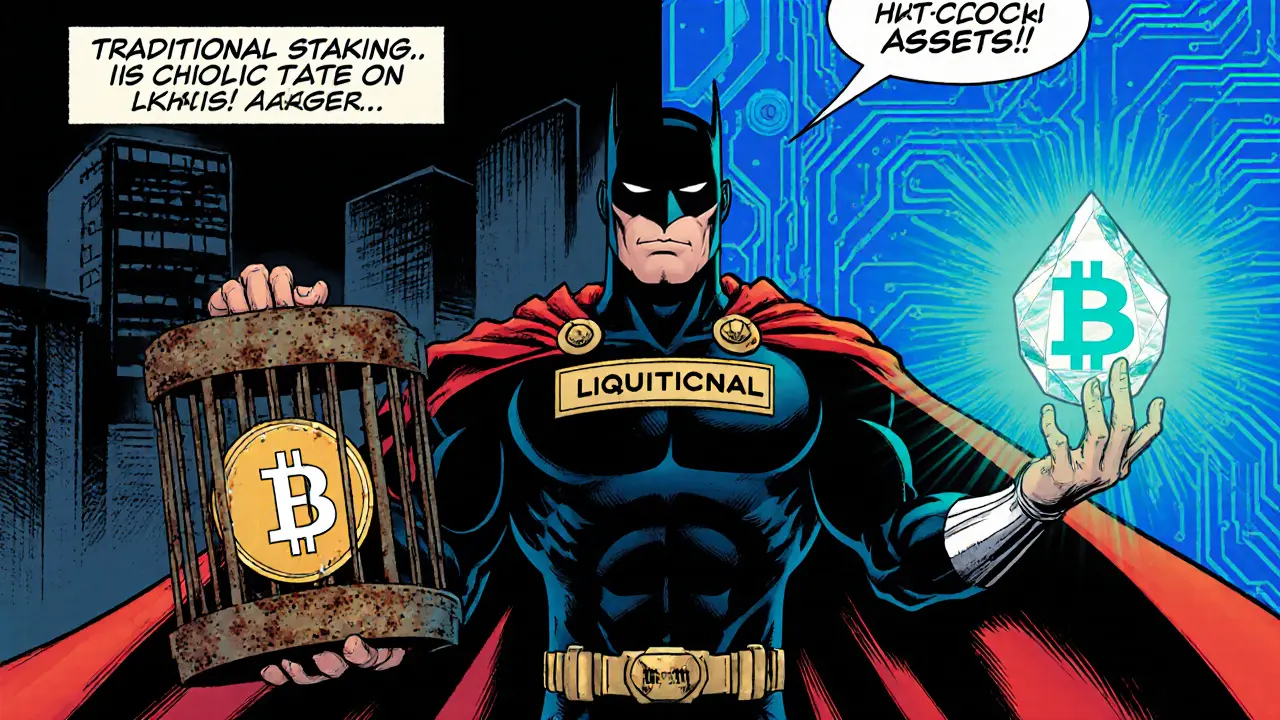
Liquid Staking
When working with Liquid Staking, a method that lets crypto holders earn staking rewards without locking up their assets. Also known as tokenized staking, it provides liquidity and flexibility for DeFi activities. In simple terms, you delegate your tokens to a staking service, receive a liquid receipt token, and can trade or use that receipt anywhere. This approach blends the security of proof‑of‑stake consensus with the freedom of tradable assets.
How It Connects to Core Crypto Concepts
The foundation is Staking, where holders lock tokens to support network validation and earn yields. Validators run the nodes that actually process transactions; liquid staking services bundle many users to meet the minimum stake required by a validator. Meanwhile, DeFi platforms love the receipt tokens because they can be supplied to lending pools, used in yield‑farming routes, or swapped on DEXes. In other words, liquid staking enables staking rewards while keeping token liquidity, and it fuels DeFi composability.
Three key semantic links drive the ecosystem: liquid staking encompasses tokenized receipt assets; tokenized receipt assets require validator backing; and validator backing influences the safety and yield of DeFi protocols that accept those receipts. Because the receipt token is tradable, users can hedge against validator downtime, move assets between platforms, or instantly capture market opportunities. This flexibility also raises new risk factors—smart‑contract bugs, custodial trust, and price slippage of the receipt token itself.
Our collection below dives into real‑world examples that illustrate these ideas. You’ll find guides on popular liquid staking providers, comparisons of fee structures, risk checklists for smart‑contract audits, and how receipt tokens integrate with yield farms and lending markets. Whether you’re a beginner curious about earning staking rewards without losing access to your capital, or an advanced trader looking to stack yields across protocols, the articles ahead give actionable insights and data‑driven recommendations.
Ready to see how liquid staking can fit into your strategy? Browse the posts below to discover the best services, understand the math behind reward rates, and learn how to stay safe while maximizing flexibility.